
From Sinai to Zion
The prophetic meaning of Shavuot and the fulfilment of the Covenant

The prophetic meaning of Shavuot (Pentecost) and the fulfilment of the Covenant: from the giving of the Torah at Sinai to the outpouring of the Ruach ha-Kodesh in Jerusalem.
Shavuot — a revelation in which the divine plan unfolds#
In the days of Shavuot we remember the great meeting — the revelation at Sinai, the day when the Most High entered into Covenant with our people.
The festival of Shavuot reveals the greatness of God's plan shown in the history of Israel.
On this day, on Mount Sinai, the Most High gave the Torah to His people and made a covenant with Israel, making it a people with a special purpose.
Scripture calls Shavuot the Feast of Weeks and of the firstfruits of the wheat harvest (Shemot / Exod 34:22; Vayikra / Lev 23:15–21; Bemidbar / Num 28:26). Israel came to Sinai "in the third month" after the Exodus (Shemot / Exod 19:1), that is, about seven weeks later — which is why the giving of the Torah is linked with Shavuot. And in the Brit Hadashah it was on the very day of Shavuot that the Most High poured out the Ruach ha-Kodesh (Ma'asei / Acts 2:1–4).
Additional opinion. Rabbinic tradition dates the giving of the Torah precisely to 6 Sivan (Babylonian Talmud, Shabbat 86b) and interprets the words "in the day of his espousals" (Song 3:11) as the day of Sinai (Mishnah, Ta'anit 4:8).
What happened at Shavuot on Mount Sinai and on Mount Zion (in Jerusalem)?#
When the Most High made a covenant with the people of Israel on Mount Sinai, it was not merely an outstanding historical event. The prophets themselves describe the Sinai covenant as a betrothal — kiddushin, a covenant of love between G-d and Israel: "I remember thee, the kindness of thy youth, the love of thine espousals, when thou wentest after me in the wilderness" (Yirmeyahu / Jer 2:2, KJV); "…and entered into a covenant with thee, saith the Lord GOD, and thou becamest mine" (Yechezkel / Ezek 16:8, KJV).
📜 In this image the Torah given from heaven is the ketubah (marriage contract), the written expression of the covenant between the Heavenly Bridegroom and His bride, Israel.
🌩️ Moshe is like the shadchan, the go-between of the Bridegroom and the bride (cf. Gal 3:19); Mount Sinai is like the chuppah; the thunder and lightning are like the voice of G-d saying:
"I am Adonai your G-d…" (Shemot / Exod 20:2).
🕊️ It was a day of the covenant of love, when the people answered: "Na'aseh ve-nishma!" — "We will do and we will hear!" (Shemot / Exod 24:7) — like a bride consenting to the betrothal.
💔 But soon after that…
Without waiting for Moshe to come back down the mountain, Israel committed a grievous sin — they bowed down to the golden calf. This happened forty days after the covenant was made (Shemot / Exod 24:18; 32:1).
It was spiritual unfaithfulness, as if a bride had betrayed the Bridegroom the moment she stepped under the chuppah. This is how the prophet too speaks of Israel's unfaithfulness: "Surely as a wife treacherously departeth from her husband, so have ye dealt treacherously with me, O house of Israel" (Yirmeyahu / Jer 3:20, KJV).
📛 Judgement could not be avoided: about three thousand men fell at the hands of the Levites, who cleansed the camp of lawlessness.
Shemot / Exodus 32:7–16, 19–20, 26–28:
"And G-d spoke to Moshe: Go down, for the people you brought out of Egypt have become corrupt. They have quickly turned aside from the way I commanded them to follow. They have made themselves a calf of cast metal, bowed down to it and sacrificed to it, crying: 'This is your god, Israel, who brought you out of Egypt.' And [then] G-d said to Moshe: 'I have looked at this people — they are stiff-necked. Now do not try to stop Me when I let My anger turn against them and destroy them. And afterwards I will make you a great nation.'
Moshe began to plead with God, his Lord, and said: 'Why, O God, do You let Your anger turn against Your people, whom You brought out of Egypt with great power, showing Your might? For then the Egyptians will be able to say that He brought them out with evil intent, to kill them in the mountains and wipe them off the face of the earth. Restrain the fury of Your anger, relent from doing evil to Your people. Remember Your servants Avraham, Yitzchak and Ya'akov, to whom You swore by Your very self and said that You would make their descendants as numerous as the stars of heaven and would give their descendants the land You promised, so that they might possess it for ever.'
And God relented from doing the evil to His people that He had intended. Moshe turned and began to go down the mountain with the two Tablets of the Testimony in his hand, Tablets written on both sides, the writing visible from either side. Tablets made by G-d, and the writing on them was the writing of G-d, engraved on the tablets. <…> And when he came near the camp and saw the calf and the dancing, Moshe became angry, and threw down the Tablets that were in his hand and broke them at the foot of the mountain. And he took the calf that [the people] had made, burned it in the fire, ground it to fine powder, scattered it on the water and made the children of Israel drink it. <…> Moshe stood at the entrance of the camp and cried out: 'Whoever is for G-d — to me!' And all the Levites gathered around him. And he said to them: 'Thus says G-d, the Lord of Israel: Let each man take his sword and go through the whole camp, from gate to gate, and kill [all who take part in the idol worship], even his brother, his close friend and his relative.' The Levites did as Moshe commanded, and about three thousand of the people fell that day."
✨ But God's Covenant with Israel was not destroyed#
The Most High showed His mercy once again. He gave new Tablets (Shemot / Exod 34:1) and through the prophet Yirmeyahu gave the promise of the Brit Hadashah (the New Covenant), in which the Torah would not be external but written on the heart: "I will put My Torah within them, and on their hearts I will write it…" (Yirmeyahu / Jer 31:33; 31:32 in the Hebrew numbering).
🔥 Sinai and Zion: three thousand fell — three thousand found life#
📜 At the foot of Sinai, after the sin of the golden calf, about three thousand people died for sin (Shemot / Exod 32:28).
🕊 At Shavuot after the resurrection of the Mashiach Yeshua, about three thousand people received forgiveness and eternal life:
"So those who accepted what he said were immersed, and there were added to the community of Messianic believers that day about three thousand people" (Ma'asei / Acts 2:41, JNT).
In this echo between the two events we see the words of Scripture: "the letter killeth, but the spirit giveth life" (2 Cor 3:6, KJV).
This is the fruit of the Blood of the Covenant that the Mashiach made with His people:
"For this is my blood of the new testament, which is shed for many for the remission of sins" (Mattityahu / Matt 26:28, KJV).
Sinai is not just history.
It is an image of a spiritual reality in which you and I take part.
| Sinai | Zion |
|---|---|
| The place where the Torah was given | The place from which it goes out to the nations |
| The beginning of the Covenant | The fulfilment of the purpose |
| A mountain in the wilderness — the beginning of correction | A mountain in the holy city |
| The outward Word | The inward fulfilment |
The covenant with Israel remains in force: it has been renewed, deepened and brought to life in the Brit Hadashah (the New Covenant).
As Sha'ul (the emissary Paul) writes, the Mashiach gave Himself "in order to present the Messianic Community to himself as a bride to be proud of, without a spot, wrinkle or any such thing, but holy and without defect" (Ephesians 5:27, JNT).
🔥 Only a pure bride will enter the chuppah of the Lamb#
As the prophets say, the wedding day will come (cf. Hoshea / Hos 2:19–20), and the Mashiach will take to Himself a people cleansed from every sin: "And I will sprinkle clean water on you, and you shall be clean from all your uncleanness… and I will give you a new heart, and a new spirit I will put within you… and I will be your G-d, and you shall be My people" (Yechezkel / Ezek 36:25–28).
🕊 In the New Covenant the bride is cleansed not through works but through faith and submission to the Mashiach, so that on the Day of His coming she may be ready, clothed in the white garments of righteousness:
"Let us be glad and rejoice… for the marriage of the Lamb is come, and his wife hath made herself ready… and to her was granted that she should be arrayed in fine linen, clean and white…" (Hazon / Rev 19:7–8).
🩸 In the New Covenant the Most High cleanses, sanctifies and restores Israel through the blood of the Covenant shed by the Mashiach Yeshua once and for all (Ivrim / Heb 9:12; 10:10).
Through the blood of the Mashiach Yeshua the bride is cleansed, and we are preparing for the coming wedding of the Lamb, where the Covenant will be finally completed in eternity.
Yirmeyahu / Jeremiah 31:31–34 (31:30–33 in the Hebrew numbering):
"Behold, the days are coming, says the LORD, when I will make a new covenant with the house of Israel and with the house of Judah, not like the covenant I made with their fathers on the day I took them by the hand to bring them out of the land of Egypt, [not like] My covenant which they broke, although I was a master to them, says the LORD;
but this is the covenant that I will make with the house of Israel after those days, says the LORD: I will put My Torah in their inward parts, and on their hearts I will write it, and I will be their God, and they shall be My people.
And no longer shall each man teach his neighbour and each his brother, saying, 'Know the LORD', for they shall all know Me, from the least of them to the greatest, says the LORD, for I will forgive their iniquity and remember their sin no more."
Forgiveness "for ever" is not merely a theological statement. It is the fulfilment of an ancient prophetic promise given through the prophet Yirmeyahu.
📜 1. What does "forgiveness for ever" mean?#
Unlike the former Covenant, in which forgiveness was tied to repeated animal sacrifices (see Vayikra / Lev 16, Yom Kippur), the Brit Hadashah rests on one perfect, effective and eternal sacrifice — the sacrifice of the Mashiach Yeshua, the Lamb of G-d.
"But now the Mashiach has come, our true High Priest. He has brought us the true good things. He performs His service in a Sanctuary incomparably greater than the earthly one — not made with hands and not belonging to the created world. Not with the blood of goats and calves, but with His own blood He entered once and for all into the heavenly Temple and obtained for us a redemption whose power is eternal" (Ivrim / Heb 9:11–12).
Forgiveness has become not temporary or partial but eternal — not because G-d has changed,
but because the promised Mediator of the Covenant has come, as proclaimed by the prophets.
🩸 2. Why only through the Blood of the Covenant?#
The blood is the life (Vayikra / Lev 17:11).
The Torah links atonement with the blood of the sacrifice, and the Letter to the Hebrews sums it up:
"Under the Torah almost everything is cleansed with blood, and without the shedding of blood there is no forgiveness" (Ivrim / Heb 9:22).
The blood of Yeshua is not merely the death of a righteous man.
It is the blood of the Covenant, which confirms the Brit Hadashah and puts it into effect: just as Moshe once sprinkled the people (Shemot / Exod 24:8), so the Mashiach has sprinkled us with His blood (cf. Heb 12:24; 1 Pet 1:2).
"This is the blood of the testament which God hath enjoined unto you" (Ivrim / Heb 9:20, KJV; cf. Shemot / Exod 24:8).
✡️ 3. Why does this concern Israel first of all?#
Because the Brit Hadashah (the New Covenant) was not given to the nations directly but made with the house of Israel and the house of Judah (Yirmeyahu 31:31).
The Mashiach came first of all to the lost sheep of the house of Israel:
"He said, 'I was sent only to the lost sheep of the house of Israel'" (Mattityahu / Matt 15:24).
And only through Israel, through the Mashiach, do the nations gain access to the promises (cf. Rom 15:8–9; Eph 2:12–13):
"For out of Zion shall go forth the Torah, and the word of Adonai from Yerushalayim" (Yeshayahu / Isa 2:3).
🌾 4. What does this mean for us today?#
- We no longer live under fear of punishment but in the assurance of forgiveness.
- We do not seek salvation in works but rely on the finished redemption of the Mashiach.
- We are partakers of the Covenant in which the Torah is written on hearts, not only on stone.
🕊 Summary#
The forgiveness of sins has become eternal because the Mashiach Yeshua:
- offered Himself as the pure Lamb,
- made the New Covenant with His blood,
- opened the way into the Father's Presence for all who enter this Covenant by faith
"Therefore there is now no condemnation for those who are in union with the Messiah Yeshua.
Why? Because the Torah of the Spirit, which produces life in union with the Messiah Yeshua, has set me free from the 'torah of sin and death'" (Romans 8:1–2, JNT)
"…the blood of the Messiah, who, through the eternal Spirit, offered himself to G-d as a sacrifice without blemish, will purify our conscience from works that lead to death, so that we can serve the living God! It is because of this death that he is mediator of a new covenant [or will]. Because a death has occurred which sets people free from the transgressions committed under the first covenant, those who have been called may receive the promised eternal inheritance" (Hebrews 9:14–15, JNT).
⚠️ Outside the Brit Hadashah (the New Covenant) there is no eternal forgiveness and no eternal inheritance.
📖 Why is it written, "Out of Zion shall go forth the Torah", if it was given at Sinai?#
How are we to understand this? Did the Torah change its place of origin?
1. 🏔 Sinai is the beginning. Zion is the goal.#
Yes, Sinai is the place where the people of Israel received the Torah. It is the moment of Israel's birth as the people of the Covenant.
But Sinai is not the final stop; it is only the beginning of the journey.
The divine plan was for the people to enter the promised land, where the Kingdom of G-d would be established.
🕊 Sinai is conception.
Zion is the birth of maturity.
2. Zion — the King's throne and the place of teaching#
The prophetic image of Zion is the centre of G-d's rule on earth. It is in Jerusalem that:
- the Temple stood — the place of God's presence;
- all the tribes of Israel gathered for the festivals;
- the Kingdom of the Mashiach is to be established.
When the prophets say, "Out of Zion shall go forth the Torah", they proclaim that from there truth and justice will go out to all the nations.
3. 🔥 Shavuot in Jerusalem — the fulfilment of prophecy#
It is no accident that it was in Jerusalem, on the day of Shavuot (Ma'asei / Acts 2), that the Ruach ha-Kodesh came down on Yeshua's disciples.
We see in this a new giving of the Torah — onto hearts, as the prophet Yirmeyahu foretold:
"I will put My Torah within them, and on their hearts I will write it" (Yirmeyahu / Jer 31:33).
So the Word went forth from Zion — not only as text, but in living witnesses filled with power.
4. ✡️ Zion — a prophetic symbol of the coming Kingdom#
In many prophecies Zion is the place from which the Mashiach will rule the nations, and then "they shall beat their swords into plowshares… neither shall they learn war any more" (Yeshayahu / Isa 2:4, KJV).
✡️ Shavuot: Promise, Word and Light#
Shavuot is the time when the people of Israel received the Torah at Mount Sinai (Shemot / Exod 19–20), and the day when, more than thirteen centuries later, at the same festival, the Ruach ha-Kodesh came down on the disciples of Yeshua the Mashiach (Ma'asei / Acts 2), confirming the spiritual renewal of the Covenant.
It is a festival of revelation in which the divine purpose is unveiled: to make Israel a light for the nations (Yeshayahu/Isa. 49:6).
Yeshayahu / Isaiah 49:3, 5–6:
"and He said to me: You are My servant, Israel, in whom I will be glorified. … And now the Lord has spoken, who formed Me from birth to be His Servant, to bring Jacob back to Him and that Israel might be gathered to Him, for I am honoured in the eyes of the Lord, and My God has become My strength;
yes, He said: It is too small a thing that You should be My Servant only to restore the tribes of Jacob and bring back the preserved of Israel;
no, I will make You a light for the Gentile nations, so that My salvation may reach the end of the earth."
🌍 Why did G-d choose Israel in particular?#
🕊 Chosen for service#
1. 🕯 To be a light amid the darkness of the nations#
"I will make you a light for the nations, so that My salvation may reach to the ends of the earth" — (Yeshayahu 49:6)
Israel was chosen not for superiority but for a mission — to carry the light of the Torah and the knowledge of the One G-d to the Gentile nations.
This election is a responsibility, not a privilege.
2. 📜 Because Avraham believed and was faithful#
"…in thee shall all families of the earth be blessed" (Bereshit / Gen 12:3).
The choosing began with the covenant with Avraham — a man of faith (Bereshit / Gen 15:6) who answered G-d's call to become the father of a people through whom G-d's blessing would come to all humanity (Bereshit / Gen 12:2–3).
3. 🏔 To receive the Word and the Covenant at Sinai#
"If ye will obey my voice indeed… then ye shall be a peculiar treasure unto me above all people… and ye shall be unto me a kingdom of priests, and an holy nation" (Shemot / Exod 19:5–6).
At Mount Sinai G-d established Israel as the people of the Covenant, entrusting it with the Torah — the truth that is to enlighten the world.
Israel became the first people called to live by the Word of G-d, so that others could learn to walk in His ways (see Micah 4:2).
4. 🔥 To receive the Ruach ha-Kodesh and become witnesses#
"…you will receive power when the Ruach ha-Kodesh comes upon you, and you will be My witnesses… to the ends of the earth" (Ma'asei / Acts 1:8).
In the days of Shavuot in Jerusalem, Yeshua's Jewish disciples received the promise of the Father — the Ruach ha-Kodesh:
"I have told you these things while I am still with you. But the Counselor, the Ruach HaKodesh, whom the Father will send in my name, will teach you everything; that is, he will remind you of everything I have said to you. <…> If you remain united with me, and my words with you, then ask whatever you want, and it will happen for you. This is how my Father is glorified — in your bearing much fruit; this is how you will prove to be my talmidim (disciples)" (Yochanan / John 14:25–26; 15:7–8, JNT).
So Israel became not only the bearer of the Word but also a witness to the power of the Mashiach for the nations.
🔄 The link between Shavuot and Israel's mission#
Both events are connected with the fiftieth day after Pesach: Israel came to Sinai in the third month after the Exodus (Shemot / Exod 19:1), and the Ruach ha-Kodesh came down at Shavuot, fifty days of counting after the Pesach on which the Lamb — the Mashiach — was sacrificed (Vayikra / Lev 23:15–16; Ma'asei / Acts 2:1; 1 Cor 5:7).
G-d shows us:
salvation (Pesach) leads to revelation (Shavuot), and revelation leads to mission.
🕊 Chosen by G-d's love and faithfulness#
Israel was chosen not because it was great (Devarim / Deut 7:7) but because G-d loved it and gave a promise to the fathers:
"The LORD chose you not because you were more numerous than other peoples — for you were the fewest of all — but because He loves you and in order to keep the oath He swore to your fathers. He brought you out with a mighty hand and redeemed you from the house of slavery, from the power of Pharaoh king of Egypt. Know therefore that the LORD your God is God. He is the faithful God, who keeps His covenant of loving-kindness to a thousand generations of those who love Him and keep His commandments" (Devarim / Deut 7:7–9).
Israel was chosen to be the firstborn among the nations and to prepare the way for the coming of the Mashiach:
"Thus saith the LORD, Israel is my son, even my firstborn" (Shemot / Exod 4:22, KJV).
Now, through the Mashiach Yeshua, Israel is called to be renewed and to shine again as a light for the nations, fulfilling its ancient calling:
"Thus says the LORD: In those days ten men from all languages and nations will take hold of the hem of one Jew's garment and say, 'Let us go with you, for we have heard that God is with you!'" (Zecharyah / Zech 8:23).
Israel's election is God's plan for all humanity.
Through the gift of the Torah at Sinai and the gift of the Ruach in Jerusalem, G-d is raising up a people who will carry the revelation of the Mashiach, the Kingdom and the Truth to all the nations of the earth.
Shavuot is not just a remembrance; it is a prophetic reminder of Israel's mission to be the light of the world.
"The festival of Shavuot came, and all the believers were gathered together in one place. Suddenly there came a sound from heaven like the roar of a violent wind, and it filled the whole house where they were sitting. Then they saw what looked like tongues of fire, which separated and came to rest on each one of them. They were all filled with the Ruach HaKodesh and began to speak in different languages, as the Spirit enabled them to speak. Now there were religious Jews staying in Yerushalayim from every nation on earth" (Ma'asei / Acts 2:1–5).
This was not the beginning of a new religion but the fulfilment of the prophecies about the restoration of Israel and the renewal of the Covenant:
"And in the last days, says God, I will pour out My Spirit on all flesh…" (Ma'asei / Acts 2:17; Joel 2:28, 3:1 in the Hebrew numbering).
Thousands of Jews came to believe in Yeshua as the Mashiach and entered G-d's plan of salvation:
"Howbeit many of them which heard the word believed; and the number of the men was about five thousand" (Ma'asei / Acts 4:4, KJV).
Later there were even more:
"You see, brother, how many tens of thousands of Jews have believed, and they are all zealous for the Torah" (Acts 21:20)
For thousands of years the people of Israel was God's chosen vessel, the guardian of the Torah, the covenants and the prophetic promises. Through the prophets God repeatedly promised that one day the nations would join His people.
This prophecy was fulfilled in the person of Yeshua of Nazareth.
Now, through His sacrifice, those who believe from all nations receive the right to be part of a renewed Israel — the people of the Covenant.
Believers from the other nations join them — not as a separate body, but as those grafted into the olive tree of Israel (Rom 11:17), thanks to the shed blood of the Mashiach:
"At that time you had no connection with the Messiah. You were estranged from the national life of Isra'el. You were foreigners to the covenants embodying God's promise. You were in this world without hope and without God. But now, you who were once far off have been brought near through the shedding of the Messiah's blood. For he himself is our shalom — he has made us both one and has broken down the m'chitzah (barrier) which divided us by destroying in his own body the enmity occasioned by the Torah, with its commands set forth in the form of ordinances. He did this in order to create in union with himself from the two groups a single new humanity and thus make shalom, and in order to reconcile to God both in a single body by being executed on a stake as a criminal and thus in himself killing that enmity" (Ephesians 2:12–16, JNT).
The purpose of the Most High is to create a new and single humanity in the body of the Mashiach.
Yet already in the first century some of the believers from the Gentiles began to boast over the Jewish "branches". So Sha'ul (the emissary Paul) addressed them — "I speak to you Gentiles" (Rom 11:13, KJV) — with a warning:
"But if some of the branches were broken off, and you — a wild olive branch — were grafted in among them and have become equal sharers in the rich root of the olive tree, then don't boast as if you were better than the branches! However, if you do boast, remember that you are not supporting the root, the root is supporting you. So you will say, 'Branches were broken off so that I might be grafted in.' True, but so what? They were broken off because of their lack of trust. However, you keep your place only because of your trust. So don't be arrogant; on the contrary, be terrified! For if God did not spare the natural branches, he certainly won't spare you!
So take a good look at God's kindness and severity: on the one hand, severity towards those who fell away; on the other, God's kindness towards you — provided you maintain yourself in that kindness! Otherwise you too will be cut off! Moreover, the others [branches], if they do not persist in their lack of trust [in God], will be grafted back in; because God is able to graft them back in. For if you were cut from what is by nature a wild olive tree and grafted, contrary to nature, into a cultivated olive tree, how much more easily will these natural branches be grafted back into their own olive tree! Brothers, I want you to grasp the truth that God formerly kept secret but has now revealed, so that you do not think you know more than you really do. [The truth] that a hardening has, to some extent, come upon Israel until the full number of the goyim (Gentiles) has come in! And that it is in precisely this way that all Israel will be saved. As the Tanakh says: 'Out of Tziyon will come the Deliverer; He will turn away ungodliness from Ya'akov, and this is My covenant with them… when I forgive their sins.'
As regards the Good News they are hated for your sake. But as regards election they are loved for the sake of the Patriarchs, since God's gifts and His calling are not subject to revision. Just as you yourselves were once disobedient to God but have now received mercy because of Israel's disobedience, so Israel is now disobedient, in order to receive mercy from God if you show it the same mercy that God has shown you. For God has shut up all humanity in disobedience, in order to show mercy to all" (Romans 11:17–32, JNT).
"For if their rejection of the Mashiach Yeshua brings reconciliation to the world, what will their acceptance bring?
It will be life from the dead!" (Rom 11:15)
Yeshayahu / Isaiah 2:3:
and many peoples shall go there and say: "Come, let us go up to the mountain of the Lord, to the house of the God of Jacob, that He may teach us His ways and that we may walk in His paths! For out of Zion shall go forth the teaching, and the word of the Lord from Jerusalem."
Micah 4:2:
"Many nations shall come and say:
'Come, let us go up to the mountain of the Lord, to the house of the G-d of Jacob.
He will teach us His ways, and we will walk in His paths.' For out of Zion shall go forth the Law, and the word of the Lord from Jerusalem."
🕊 How to prepare for the festival of Shavuot?#
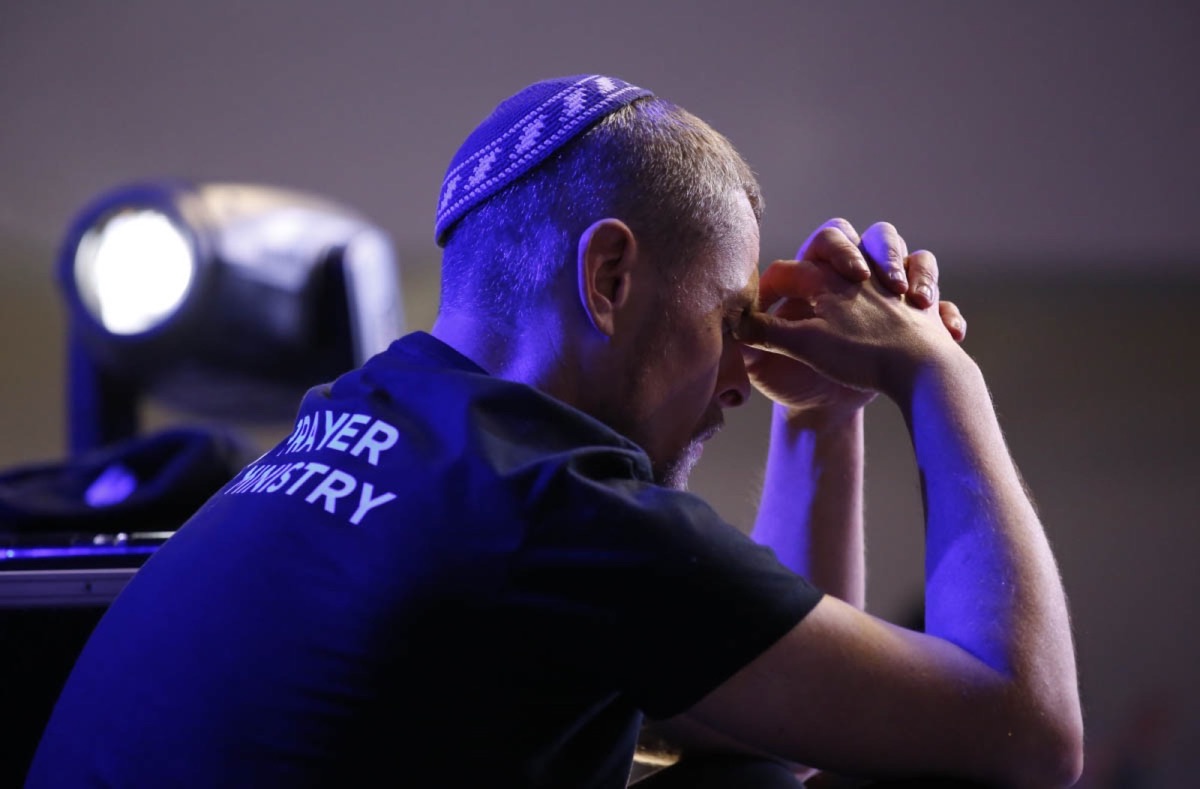
Shavuot is not only a remembrance of the giving of the Torah at Mount Sinai.
It is also a Messianic experience, prophetically fulfilled in the Brit Hadashah: the day when the Ruach ha-Kodesh (the Holy Spirit) came down on Yeshua's disciples in Jerusalem (Ma'asei Shlichim / Acts 2).
It is a time of deep spiritual renewal and of meeting with G-d.
When Yeshua's disciples received the Ruach ha-Kodesh (the Holy Spirit) on the day of the festival of Shavuot, they gained not merely inner inspiration or an emotional experience, but a concrete spiritual power 🔥:
1. Power for spiritual rebirth#
The Ruach ha-Kodesh renews the heart and enables a person to live by the Torah — not by the letter, but in the Spirit (see 2 Cor 3:6; Rom 7:6).
This is the inner power to live in holiness.
2. Power for inner renewal#
📖 Yechezkel / Ezekiel 36:26–27
"A new heart also will I give you, and a new spirit will I put within you… And I will put my spirit within you, and cause you to walk in my statutes…"
This is the ability not only to hear G-d's will but to live in it — to keep the Torah not out of fear but out of love, in keeping with the New Covenant.
3. Power to speak in other tongues and to pray in the spirit#
"And began to speak with other tongues, as the Spirit gave them utterance" (Ma'asei / Acts 2:4, KJV).
This is a supernatural sign of the outpouring of the Spirit — confirmation that the promise has been fulfilled.
Praying in other tongues brings spiritual renewal and strengthening (cf. 1 Cor 14:14–15).
📖 1 Corinthians 14:4
"He that speaketh in an unknown tongue edifieth himself" (KJV) — that is, he is strengthened and receives support from the Most High.
4. Power for holiness and victory over sin#
📖 Romans 8:13
"…if ye through the Spirit do mortify the deeds of the body, ye shall live" (KJV).
Living in purity is possible only with His Spirit.
It is an inner transformation through His presence.
5. Power to bear the fruit of the Spirit#
📖 Galatians 5:22–24
"But the fruit of the Spirit is love, joy, peace, patience, kindness, goodness, faithfulness, humility, self-control. Nothing in the Torah stands against such things. Moreover, those who belong to the Messiah Yeshua have put their old nature to death on the stake, along with its passions and desires" (JNT).
This is the power to form the character of the Mashiach — to become like Him, to be transformed into His image.
6. Power to serve in the body of the Mashiach#
📖 1 Corinthians 12:4–7
"But the manifestation of the Spirit is given to every man to profit withal" (1 Cor 12:7, KJV).
Through the Ruach gifts are given — to build up the community and to serve the people (cf. 1 Cor 14:12).
7. Power to be a witness#
"You will receive power… and you will be My witnesses" (Ma'asei / Acts 1:8).
This is the power of witness: the ability to proclaim the Truth boldly — despite pressure, persecution and fear.
How to meet Shavuot not just as a festival but as a prophetic experience of the Covenant?#
🕊 A Messianic guide to spiritual preparation for the festival of Shavuot: seven steps based on Scripture, on the prophetic meaning of the festival and on the renewal of the Covenant through the Mashiach Yeshua.
1. Understand the essence of the festival: Shavuot is a time of Covenant#
Shavuot is:
- The giving of the Torah on Mount Sinai (Shemot / Exod. 19–20)
- the outpouring of the Ruach ha-Kodesh in Jerusalem (Ma'asei / Acts 2);
- The fulfilment of the promise: "I will put My Torah in their hearts" (Jer. 31:31–33)
It is not just a historical event but a call to renew the Covenant — personally and as part of the people of Israel.
2. Cleansing — spiritual preparation#
As the people of Israel cleansed themselves before meeting G-d (Exod. 19:10–11), so do we:
- We make teshuvah (repentance)
- We forgive and ask forgiveness
- We renounce sin
- We renew our covenant with Yeshua, who has washed us with His blood
3. Counting the Omer — a path of spiritual growth#
The Counting of the Omer — seven weeks, 49 days from the offering of the first sheaf after Pesach to Shavuot (Vayikra / Lev 23:15–16) — is a spiritual ladder of ascent.
Every day is an opportunity:
- to grow in faith, love, patience and obedience
- to learn self-discipline and closeness to God
Questions for reflection:
- What has changed in me along this path?
- Has my relationship with the Heavenly Father become stronger and closer?
4. Thirst for the Ruach ha-Kodesh — as at the first Shavuot#
"…wait for the promise of the Father… you will receive power…" (Ma'asei / Acts 1:4, 8).
Pray for:
- a fresh anointing
- the unfolding of the gifts of the Spirit
- an inner fire for service
- the Spirit's guidance in your covenant with God
5. Receive the Torah as a ketubah — a marriage covenant#
The Sinai covenant is Israel's betrothal to G-d (Yirmeyahu / Jer 2:2), and the Torah in this image is the ketubah (marriage contract).
Our response is "Na'aseh ve-nishma" ("We will do and we will hear", Shemot / Exod 24:7).
Through the Brit Hadashah the Torah is written on the heart (Yirmeyahu / Jer 31:33; 2 Cor 3:3), and we walk not by the letter but in the Spirit.
6. Wait for the Bridegroom — the prophetic outlook of Shavuot#
Shavuot points forward — to the marriage of the Lamb (Hazon / Rev 19).
Now is the time of the bride's preparation:
- cleansing of the heart
- being filled with oil (the Holy Spirit)
- righteous deeds of faith (Ya'akov / James 2:17) "So faith that is not accompanied by deeds is dead. … Indeed, just as the body without the spirit is dead, so faith without deeds is dead."
7. Enter a renewed covenant with the living God#
Shavuot is not just a date in the calendar. It is an invitation:
- to renew the Covenant
- to receive the Torah with the heart
- to receive the fullness of the Spirit
- to dedicate yourself to the Mashiach and His Kingdom
✨ Conclusion#
"Blessed are those who hunger and thirst for righteousness, for they shall be satisfied" (Mattityahu 5:6)
May this Shavuot become for you:
- a moment of renewing the Covenant,
- a time of cleansing and sanctification,
- a fiery experience of the presence of the Ruach ha-Kodesh,
- so that you may fulfil your calling in the Mashiach Yeshua.
🔯 "And I will put My Torah within them, and on their hearts I will write it…" (Yirmeyahu 31:33)
The prophecies are fulfilled in the Brit Hadashah, the New Covenant, through the blood of the Mashiach Yeshua, in which the forgiveness of sins is once and for all (Ivrim / Heb. 9–10).
The bride is cleansed!
The Covenant is renewed!
The Bridegroom is coming!
About the quotations. KJV — King James Version; JNT — David Stern's Jewish New Testament. Other quotations from the Tanakh are given in modern translations close to the Hebrew text. The article is based on Scripture and its Messianic interpretation; rabbinic sources, where cited, are an additional opinion. Words in square brackets are editorial explanations. Verse numbering follows English editions; where the Hebrew numbering differs, it is given separately.