Jewish Pesach, Christian Easter: Why the Difference?

Pesach is Jewish, Easter is Christian. Why is that?
If Yeshua (Jesus) died and rose again at Pesach, why does the Christian church celebrate His resurrection at a different time?
Why did these festivals become separated?
How the first New Testament communities celebrated Pesach#
In the early days after Yeshua's resurrection, the disciples naturally remembered His death and resurrection every Pesach.
And rightly so, because Pesach was instituted as a foreshadowing of the Messiah's atoning sacrifice.
It is full of symbolism that points wholly to Yeshua: His death and blood win us freedom and make death "pass over us" — just as in Egypt the destroyer passed over the houses of our forefathers, who had put the blood of the lamb on their doorposts (Shemot / Exod 12:13, 23).
1 Corinthians 5:7–8 (JNT):
"Get rid of the old hametz [leavened bread], so that you can be a new batch of dough, because in reality you are unleavened. For our Pesach lamb, the Messiah, has been sacrificed. So let us celebrate the Seder [the specially ordered sequence of readings, prayers, eating and drinking at the festive table] not with leftover hametz, the hametz of wickedness and evil, but with the matzah of purity and truth."
Note that Paul calls us to celebrate (Greek ἑορτάζωμεν, "let us celebrate the festival") and uses the symbols of Pesach as his example.
He wants New Testament believers to celebrate Pesach, understanding not only the outward order of the festival but also the full spiritual meaning of the sacrifice of the Passover Lamb.
Paul uses the image of the Passover lamb for the sacrifice of Yeshua (Jesus Christ), which has set us free from slavery to sin.
By contrasting leaven with unleavened bread, Paul points to the need to get rid of sin (leaven — wickedness and evil) in our lives and to take hold of purity and truth (unleavened bread), which symbolise new life in the Messiah.
So the believers of the New Testament went on celebrating Pesach together with the Jews, but now in the fullness of its spiritual meaning.
How did the separation come about?#
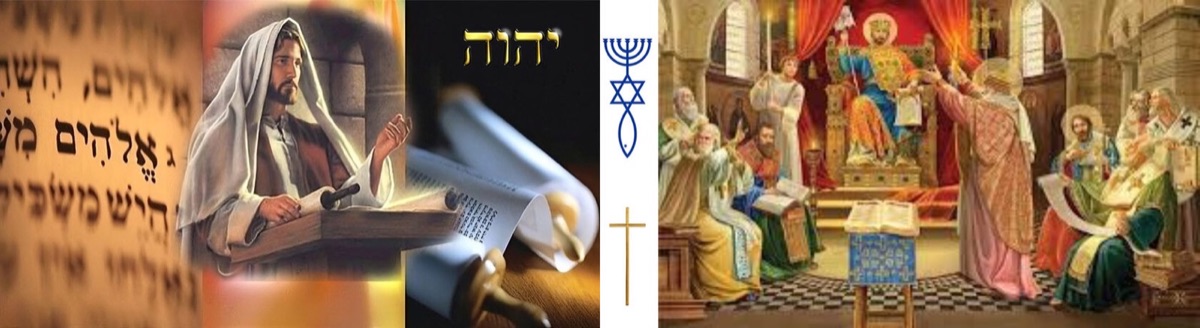
By the third century the Messianic community had grown greatly through the addition of Gentiles and was becoming less and less Jewish.
For several decades, amid persecution and rejection from various sides, the Body of the Messiah flourished, as long as all believers saw it as a community both Jewish and New Testament, where everything is by grace. This grace enabled everyone to keep the law of freedom — the royal law of God's love for us and of our love in return for God and for one another (Ya'akov / James 1:25; 2:8).
But in the second century the opposite process began. After two catastrophes of the Jewish people — the First Jewish War (66–73) and the Bar Kokhba revolt (132–135) — the church became more and more Gentile.
First Gentile in membership, and then in spirit as well.
By that time relations between the Jewish community and the Christians had badly deteriorated.
At the Council of Nicaea in 325, church leaders decided to take matters into their own hands.
"It was declared unworthy, in the holiest of all festivals, to follow the custom of the Jews, whose hands are stained with the most terrible of crimes and whose minds are blinded. By rejecting their custom we can hand on to our descendants the lawful way of celebrating Pascha. We must have nothing in common with the Jews, for the Saviour has shown us another way… we desire, dear brothers, to separate ourselves from the detestable company of the Jews…"
— from Emperor Constantine's letter to the churches after the Council (Eusebius of Caesarea, Life of Constantine, Book III, 18–20)
Perhaps these words do not shock you, though they should!
The Council decided that Easter would be celebrated separately from the Jewish Pesach and by a single reckoning for all the churches, in order deliberately to separate itself from the people of Israel. Later the rule was formulated like this: Easter is celebrated on the first Sunday after the first full moon of spring (according to the Julian calendar; the Gregorian calendar appeared only in 1582).
Pesach, Pascha and Easter#
In the Greek text of the New Testament the festival is called πάσχα (pascha) — the same word as the Hebrew "Pesach" (by way of the Aramaic "pischa"). The Russian and Ukrainian name of the festival, «Пасха», comes from it as well. So the word "Pascha" itself means Pesach.
The English word Easter is a different matter. In the King James Bible (1611) the word πάσχα in Acts 12:4 is translated "Easter", although everywhere else it is rendered "passover" (Pesach). And Acts itself is speaking precisely of Pesach:
Acts 12:1–4 (JNT):
"It was at about this time that King Herod began arresting and persecuting certain members of the Messianic community; and he had Ya'akov, Yochanan's brother, put to death by the sword. When Herod saw that this pleased the Judeans, he had Kefa (Peter) arrested as well. This took place during Hag ha-Matzot (the days of Matzah), so Herod seized him and threw him into prison, ordering that he be guarded by four squads of four soldiers each, intending to bring him before the people for trial after Pesach."
According to the Venerable Bede (8th century), the English Easter (like the German Ostern) is connected with the name of the Anglo-Saxon spring goddess Eostre; "Ostara" is her Germanic name as reconstructed in the 19th century. Thus in the Germanic languages the new festival in honour of the death and resurrection of Yeshua (Jesus) received a name unrelated to Pesach.
Why, then, did people begin to call a biblical festival by the name of a pagan goddess?
And where did the ever-cheerful hare on Easter cards come from? The Easter hare is first mentioned in Germany in the 17th century; its link with the cult of a spring goddess is a hypothesis of 19th-century scholars.
A number of ethnographers connect Easter baking (such as the Slavic kulich and paska) with pre-Christian spring fertility rites.
Further reading (in Russian): Easter in the Slavic tradition.
So the festival came to belong "to both sides": for Christians, the resurrection of the Messiah; for pagans, spring festivities and fertility rites.
The consequences and the situation today#
It is sad that such hostility arose between the two communities, leading Christians to break away from the roots of the tree into which they had been grafted (Rom 11:17–18). They chose to separate themselves not only from the people of Israel but also from God's festivals, which were given to help us understand God's plan of redemption better.
Pesach is God's design, and He made every detail of it on purpose.
No one is condemned for not celebrating Pesach (cf. Col 2:16), but people miss many treasures that God placed in His Word to teach us.
Sadly, the Council of Nicaea decided on behalf of all Christians that Pesach no longer had anything to do with them.
Christianity cut itself off not only from the roots of its faith, its heritage and the festivals of God set out in the Bible — the very message of Yeshua became more and more obscure and foreign to the Jewish people.
The church became a foreign, non-Jewish, forbidden zone for Jews.
The communities separated from each other, the root of antisemitism entered Christianity, and for most of church history the Jewish people suffered persecution, torture and murder simply for being Jews.
This happened especially often at Easter, when enraged mobs attacked those they regarded as "Christ-killers".
Most Christians do not even know how sad this history is: it is not taught in Sunday school, or even in church history classes.
Beginning with Emperor Constantine's laws hostile to the Jews (from 315), the church's influence in the world kept growing, and with it the "teaching of contempt" for the Jews (a phrase of the French historian Jules Isaac). This led to social discrimination against Jews, blood libels and pogroms — carried out by Christians with the church's blessing, and at times at its direct call. Some Christian theologians and other writers presented the crucifixion of Christ as "deicide" committed by the Jews. More on Constantine's edicts (in Russian): texts and commentary.
There is a great information gap between the Jewish Messianic congregations and the Church. We have been kept apart for so long that we have a lot of catching up to do!
Orthodox Jews celebrate the Exodus from Egypt, and Christians the resurrection of Jesus#
But in reality these are two parts of one Passover celebration, which today only Messianic Jews celebrate in full.
The Messianic Jewish community will become the main means of overcoming the most serious schism in history — the schism between Christians and Jews — helping both to fulfil their calling from God.
Jews and non-Jews gathered together in the body of Yeshua the Mashiach#
We live in an astonishing time: over the last century great steps have been taken towards healing the rift between Jews and non-Jews. By an estimate widespread in the Messianic movement, more Jews have come to faith in Yeshua as the Messiah in recent decades than in all the previous centuries. And more and more non-Jewish believers are showing interest in the Jewish foundations of their faith.
Many churches hold Passover Seders and say more about the festival, and understanding of the people of Israel is growing, since in recent centuries the Bible has been widely translated and printed.
We are destined to become "one new man" in the Messiah (Eph 2:15), and God will surely bring us to this goal.
The Bible says that the calling of the Gentiles is to provoke the Jews to jealousy, and the calling of the Jews is to be a light to the Gentiles (Rom 10:19; 11:11–14; Isa 49:6).
Romans 11:13–15 (JNT):
"However, to those of you who are Gentiles I say this: since I myself am an emissary sent to the Gentiles, I make known [everywhere] the importance of my work in the hope that somehow I may provoke some of my own people to jealousy and save some of them! For if their casting Yeshua aside means reconciliation for the world, what will their accepting him mean? It will be life from the dead!"
It is important to remember what the death and resurrection of Yeshua mean and what has already been accomplished by them!
"The Feast of Unleavened Bread" — Hag ha-Matzot#
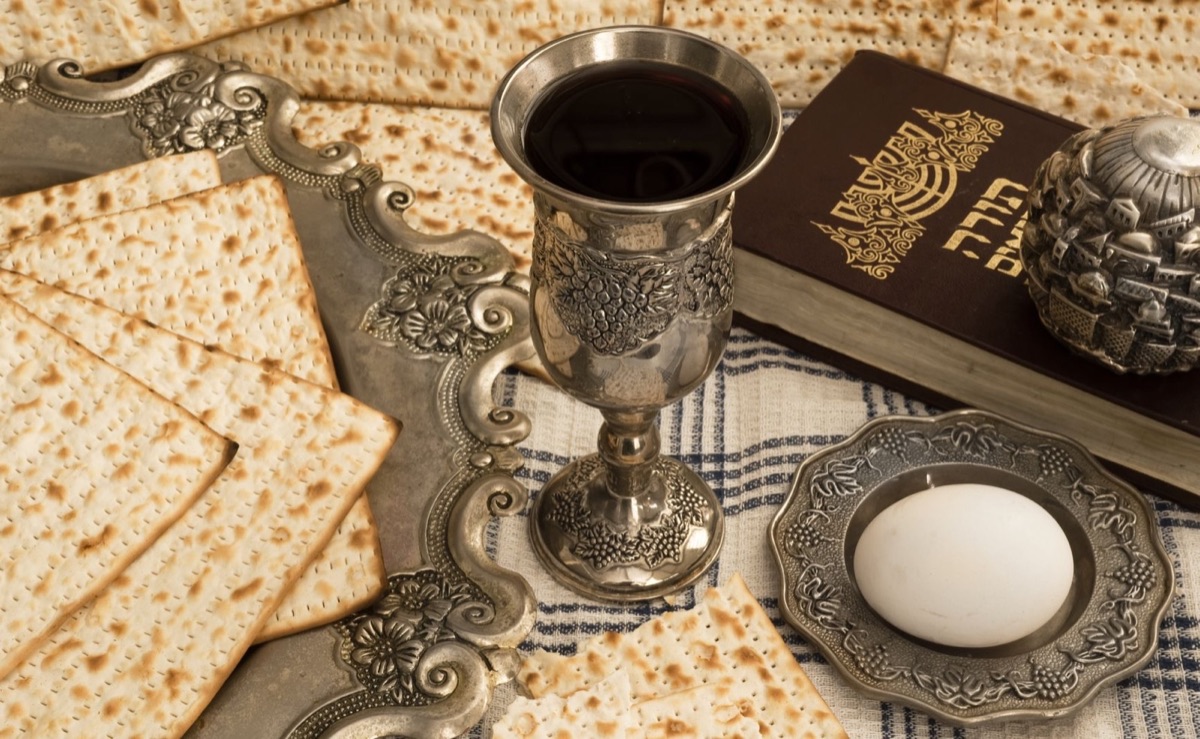
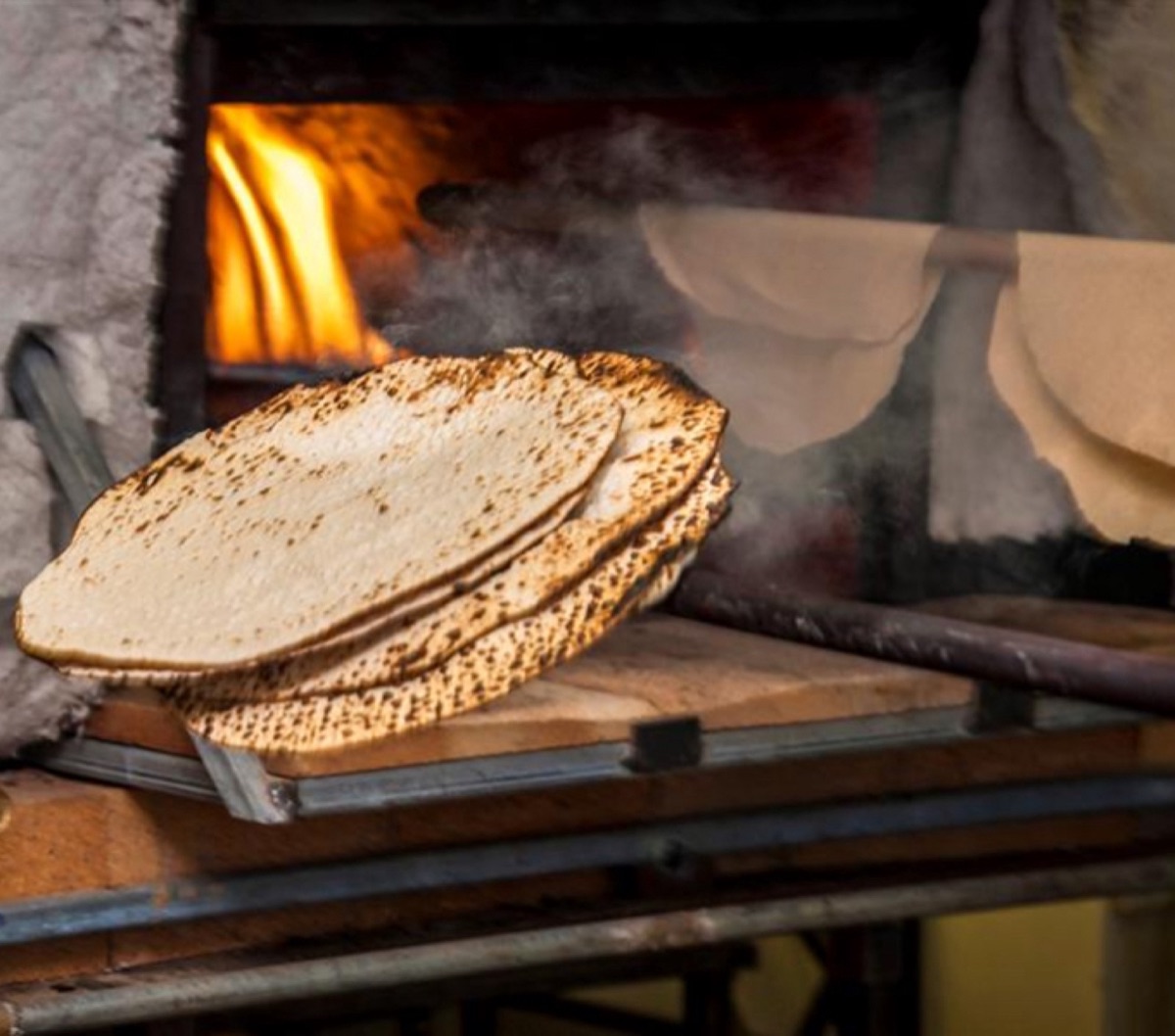
Pesach takes this name from the commandment to eat only matzah — unleavened bread — during the seven days of the festival (Shemot / Exod 12:15, 17–20).
Matzah is unleavened bread baked in a special way. According to Shemot / Exod 12:34, 39, the Jews ate matzah during the Exodus because they left Egypt in such haste that there was no time to wait for the dough to rise.
Matzah is the only bread that, according to the Torah, may be eaten at Pesach. In Scripture leaven (hametz) most often symbolises sin and the inclination of the fleshly nature towards sin (Mattityahu / Matt 16:6; 1 Cor 5:6–8; Gal 5:9).

Why matzah is an image of the body of the Mashiach#
1 Corinthians 5:7 in a free rendering that conveys a Jewish flavour:
"So get rid of that stale se'or (the old leaven) already, so you should turn out a fresh batch of dough, just like you are matzot now (unleavened like matzah)! Nu, yes! Because our ha-Pesach is the Mashiach, sacrificed for us."
In the King James Version: "Purge out therefore the old leaven, that ye may be a new lump, as ye are unleavened. For even Christ our passover is sacrificed for us."
Yeshayahu / Isaiah 53:5 (KJV, with notes on the Hebrew words):
"But he was wounded [מְחֹלָל, mecholal — wounded, pierced] for our transgressions, he was bruised [מְדֻכָּא, medukka — beaten, crushed] for our iniquities: the chastisement of our peace was upon him; and with his stripes [חֲבֻרָתוֹ, chavurato — wounds, weals, stripes] we are healed."
In this image matzah is pierced, "beaten" (its surface resembles the marks of blows) and striped.
Matzah is "the bread of affliction"#
This is what the Torah calls it (Devarim / Deut 16:3).
— "For ye know the grace of our Lord Jesus Christ, that, though he was rich, yet for your sakes he became poor" (2 Cor 8:9, KJV).Matzah has many piercings#
A crown of thorns pierced Yeshua's head, His hands and feet were pierced with nails, and His side with a spear.
— "And when they had platted a crown of thorns, they put it upon his head, and a reed in his right hand: and they bowed the knee before him, and mocked him, saying, Hail, King of the Jews! And they spit upon him, and took the reed, and smote him on the head" (Mattityahu / Matt 27:29–30, KJV).
— "…they pierced my hands and my feet" (Tehillim / Ps 22:16, KJV; 22:17 in the Hebrew numbering).
— "Then saith he to Thomas, Reach hither thy finger, and behold my hands; and reach hither thy hand, and thrust it into my side: and be not faithless, but believing" (Yochanan / John 20:27, KJV).
— "But one of the soldiers with a spear pierced his side, and forthwith came there out blood and water" (Yochanan / John 19:34, KJV).Matzah has stripes#
His body was covered with stripes from the scourging.
— "…and when he had scourged Jesus, he delivered him to be crucified" (Mattityahu / Matt 27:26, KJV; cf. Mark 15:15; John 19:1).
Matzah is mixed only with water#
Yeshua (Jesus) was pure and without sin — like matzah without leaven (Heb 4:15; 1 Pet 2:22).
He was immersed in water:
— "And it came to pass in those days, that Jesus came from Nazareth of Galilee, and was baptized of John in Jordan" (Mark 1:9, KJV).Matzah is scorched by fire#
Yeshua (Jesus), having taken on Himself the sins of all people, passed through death and went down to Sh'ol, the realm of the dead, but did not remain there.
— "He seeing this before spake of the resurrection of Christ, that his soul was not left in hell, neither his flesh did see corruption" (Ma'asei / Acts 2:31, KJV).
— "I am the One who lives. I was dead, but look! I am alive forever and ever, and I hold the keys of death and of Sh'ol" (Hazon / Rev 1:18).
— "His eyes were as a flame of fire…" (Hazon / Rev 19:12, KJV).
God wants us to know Him#
That is why He reveals Himself through objects familiar to us.
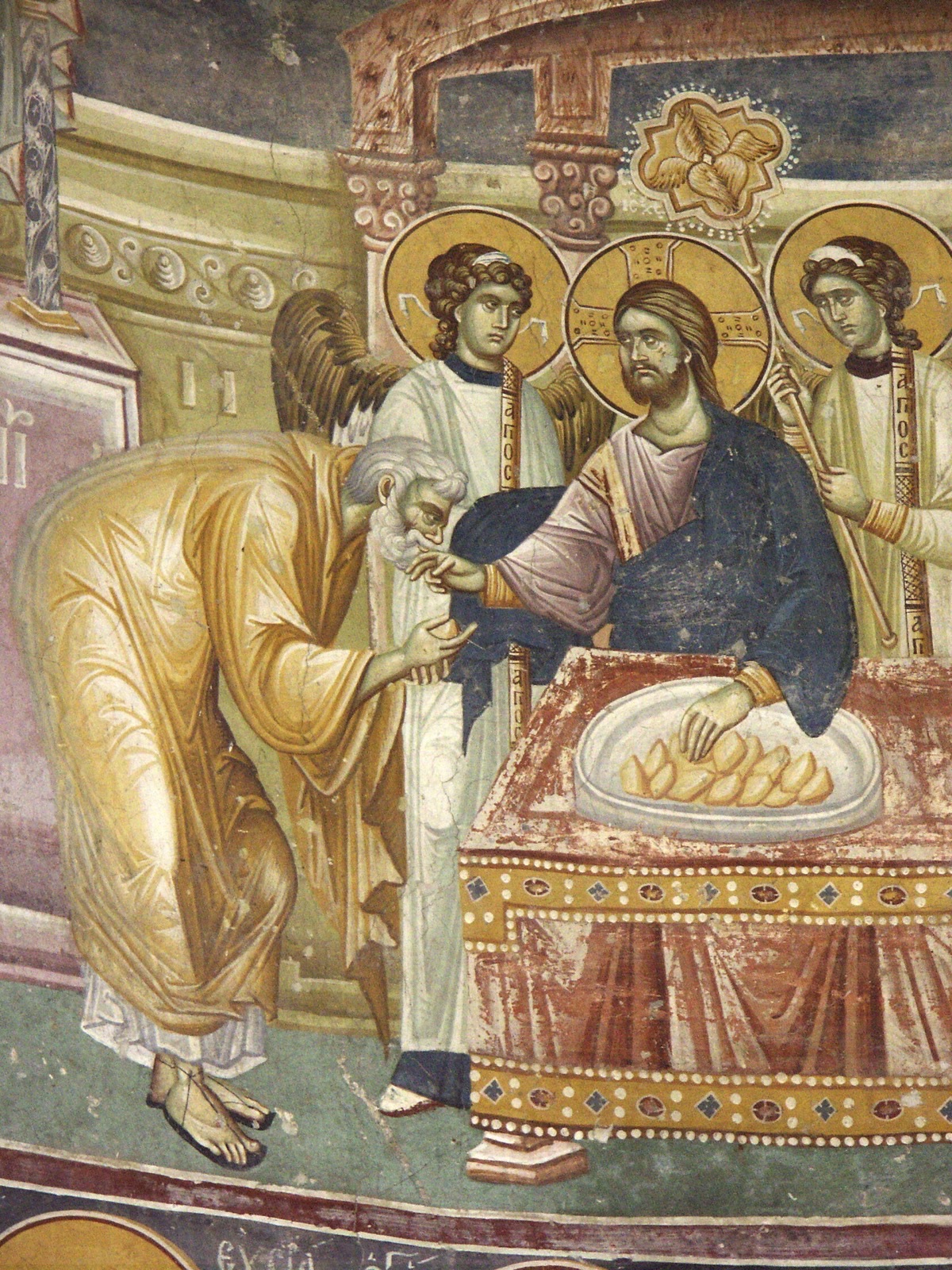
Yeshua (Jesus) taught in terms close to His first-century Jewish community. He told stories about sheep, the harvest and the vineyard. He taught where people gathered — in the synagogues and in the Temple. So it is no surprise that He spoke of Himself using matzah, the central element of Pesach, which His followers celebrated every year (Luke 22:19).
As we reflect on how matzah points to Yeshua (Jesus), let us rejoice that He came to save us.
Yeshua suffered for us, died and rose again, so that God might forgive our sins and we might find eternal life in Him!