Pesach in the New Testament
How Yeshua and His disciples celebrated. A Messianic Passover Haggadah

Pesach in the New Testament. How Yeshua and His disciples celebrated
At Pesach families gather at the table and hold a meal called the seder.
The word "seder" means "order" in Hebrew.
The meal is called a Seder because the order of the meal is meant to tell the whole story of Pesach.
Each element of the meal takes the family through Scripture, from Israel's arrival in Egypt to its miraculous deliverance.
For those who believe in Yeshua (Jesus), these elements tell not only the story of the Exodus from Egypt but also, in a special way, of the life, death, burial and resurrection of Yeshua from the dead.
The Gospel of Matthew (JNT)#
17. On the first day of matzah the talmidim (disciples) came to Yeshua and asked, "Where do You want us to prepare the Seder for You?"
The first day of matzah ("unleavened bread"). Pesach is also known as the Feast of Matzah, because an essential element of it is eating only unleavened bread for seven days (Shemot / Exodus 12:15–20).
By tradition, on the eve of the festival the last chametz must be removed from the house and burned, and from that moment the only bread in the house is matzah. So "the first day of matzah" is the day before Pesach begins. Since in the Jewish calendar the day begins at sunset, the chametz is burned in the morning, and Pesach begins with the Seder service after the sun goes down. Seder literally means "order", but here it refers to the ordered ceremony and meal with which the week of Pesach begins.
In those days the laws of Pesach required a lamb to be slaughtered and eaten in remembrance of the lamb slaughtered and eaten by each family on the night of the Exodus from Egypt (Shemot / Exodus 12:3–14).
After the Temple was destroyed in 70 CE and there was no longer anywhere to slaughter the lamb, a custom arose of placing a lamb's shank bone on the Seder plate in memory of this sacrifice. Today Sephardic traditions permit or even prescribe a lamb dish at Pesach, but Ashkenazi Jews avoid eating lamb, since it cannot be slaughtered in the Temple.
18. "Go into the city to a certain man," He answered, "and tell him that the Rabbi says, 'My time is near; I and My talmidim will celebrate Pesach at your house.'" 19. The talmidim did as Yeshua told them and prepared the Seder. 20. When evening came, Yeshua reclined with the twelve talmidim;
Verse 20. Reclined. The last of the "Four Questions", asked in the modern Seder service by the youngest person present, is: "On all other evenings we eat sitting or reclining; why on this evening do we all recline?" The answer is that at the time this question was placed in the Seder liturgy, slaves ate sitting or standing, and only free Roman citizens reclined. So in the terms of Roman culture, reclining symbolizes freedom from slavery in Egypt.
21. And during the meal He said, "Yes, I tell you that one of you is going to betray Me." 22. They were deeply grieved and began asking Him one after another, "Lord, it isn't me, is it?" 23. He answered, "The one who dips his matzah in the dish with Me is the one who will betray Me.
Verse 23. Dips his matzah in the dish. The dish may well have contained charoset and/or maror, which are part of the Seder today.
Charoset is a sweet paste of fruit, nuts, spices and wine; there are a great many recipes used in different Jewish ethnic communities. The purpose of this element of the Seder is to resemble, by its appearance, the mortar the Israelite slaves made in Egypt, and it is mentioned by the sages of the Mishnah (Pesachim 2:8; 10:3; in 10:3 — Rabbi Elazar bar Tzadok).
Maror means "bitter herbs", recalling the bitterness of the Israelites' slavery under Pharaoh; today horseradish root or lettuce is used as maror.
Rabbi Hillel, who lived a generation before Yeshua, introduced the custom of eating a "sandwich" of a piece of the Passover lamb, matzah and maror, as a literal fulfilment of the command: "On (in ancient Hebrew, 'al) matzah and maror they shall eat it" (Exodus 12:8). (Today Ashkenazi Jews do not eat lamb at Passover because it cannot be slaughtered in the temple)
26. While they were eating, Yeshua took a piece of matzah, said the b'rakhah, broke it, gave it to the talmidim and said, "Take, eat! This is My body!"
Verse 26. The piece of matzah here may be the very first piece, eaten just before the meal. If so, Yeshua said the usual blessing over bread, followed by the words: "Blessed are You, Adonai our God, King of the universe, who has sanctified us by His commandments and commanded us to eat matzah" (see Exodus 12:15–20).
In the modern Seder three pieces of matzah are placed in a cloth pouch called a matzah tash.
At the beginning of the service the middle piece of matzah is broken.
One half is divided into enough pieces for those taking part in the service and eaten.
The other half, called the afikoman, is hidden, and later the children find it, after which it is divided and eaten as the last course of the meal.
The meal is concluded by the afikoman — the final course.
In Temple times the afikoman was the Passover sacrifice, and after the Temple's destruction it became the piece of matzah broken off at the beginning of the seder.
The afikoman is eaten before the third cup, the cup of "redemption".
The Gospels do not describe in detail how exactly Yeshua broke the bread, and the custom of three sheets of matzah and the hidden afikoman is attested in later sources. But in the Messianic interpretation this rite is read as a picture of the Messiah. The middle of the three sheets of matzah (here an image of the mediator between God and the people) is broken, as His body was broken; half of it is wrapped in a linen napkin, as He Himself was wrapped in a shroud for burial; it is hidden, as He was buried; brought out, as He rose; and given to all at the table, as He gave His life for all who believe.
In this interpretation the middle sheet of matzah symbolizes His spotless body, given for the redemption of His people. Like the matzah with its stripes and holes, His body would be beaten and pierced, and by His wounds we are healed (Yeshayahu / Isa 53:5).
This middle sheet of matzah, the afikoman, is our bread of communion.
Modern Judaism holds that the three matzot symbolize the kohanim (priests), the Levi'im (Levites) and Israel (everyone outside the first two categories); some writers suggest (this is a hypothesis, not a proven fact) that this custom was added to the seder service by Messianic Jews, for whom the three matzot symbolize the Father, the Son and the Ruach HaKodesh (Holy Spirit).
The second matzah symbolizes the Son, who called Himself "the bread of life" (Yochanan / John 6:35, 48) and who in this verse says of the matzah: "This is My body." The second matzah is broken and distributed to all (symbolizing His death for all humanity).
These symbols remain unrevealed in traditional Judaism, which explains them differently.
But, like the afikoman, these truths about the Messiah will in time be found and acknowledged!
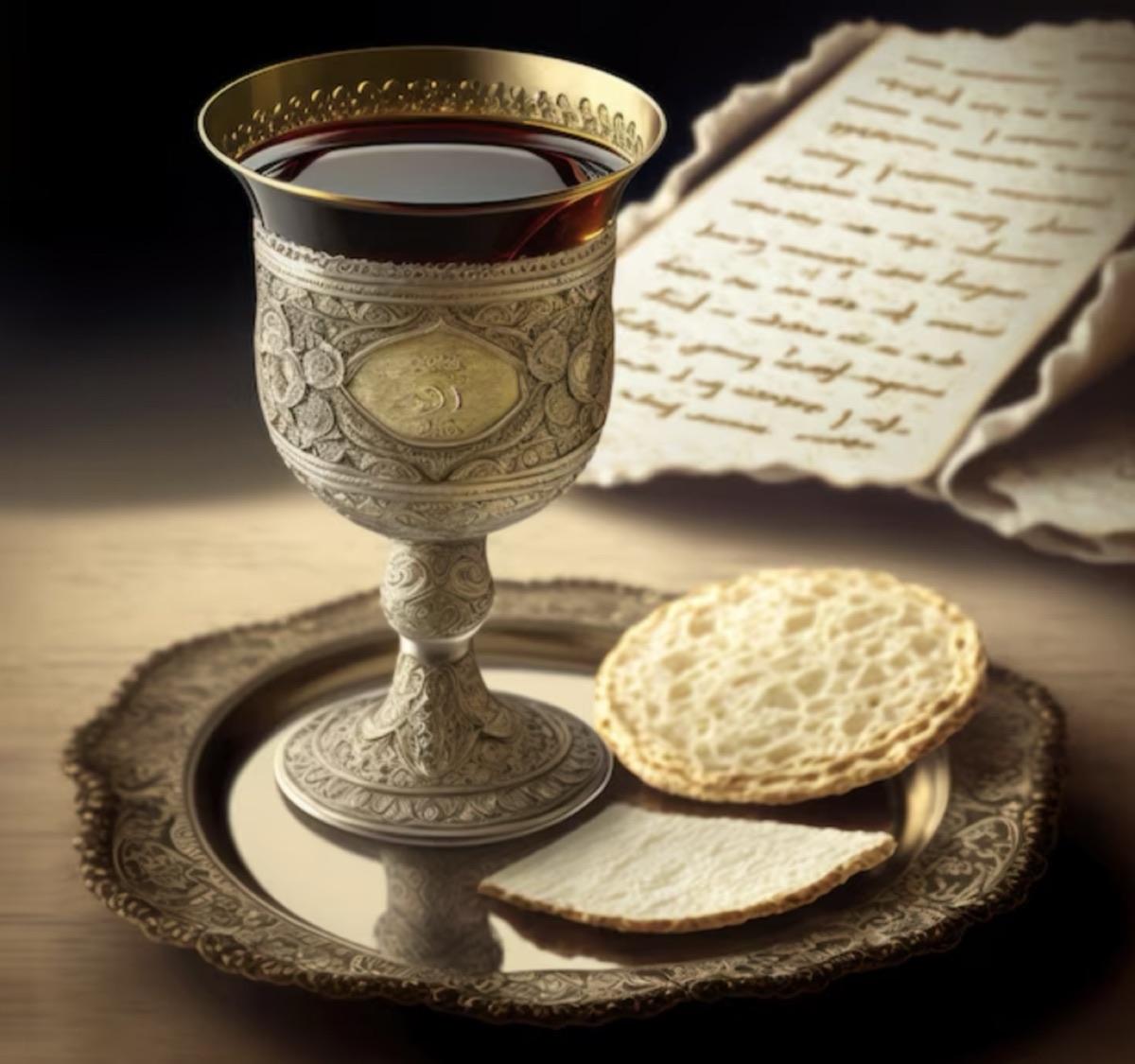
27. He also took a cup of wine, said the b'rakhah and gave it to them, saying, "All of you, drink from it!
Over the wine the following b'rakhah is said:
"Baruch atah, Adonai Eloheinu, Melech ha-olam, borei p'ri ha-gafen"
("Blessed are You, Adonai our God, King of the universe, who creates the fruit of the vine").
Without doubt Yeshua used the traditional blessing, since in verse 29 He quotes the phrase "fruit of the vine" from it.
The cup of wine.
Luke is the only one of the four writers describing the institution of the New Covenant, the Brit Chadashah, who mentions two cups of wine: one before the meal (Luke 22:17) and another after it (Luke 22:20); cf. Matt 26:26–29; Mark 14:22–25; 1 Cor 11:23–25; see also John 6:51–58; 13:1–20.
During the Passover Seder every participant drinks four cups of wine.
Each cup has its own meaning and represents a promise God gave to Israel.
- The first cup is the cup of sanctification, which represents the first promise: "I will bring you out from under the burdens of the Egyptians"
- The second cup is the cup of plagues, telling us of the second promise: "I will deliver you from their slavery".
Many Messianic interpreters understand it this way: Yeshua linked the New Covenant with the third cup — the cup of redemption, drunk after the meal (Luke 22:20; 1 Cor 10:16) — and of what follows He said that He would drink "new wine" in His Father's Kingdom (Matt 26:29).
- The third cup is the cup of redemption, which holds the third promise: "I will redeem you with an outstretched arm".
- And the last, fourth cup is the cup of praise, reminding us of the fourth promise: "I will take you to Me for a people, and I will be to you a God" (Shemot / Exod 6:7).
28. For this is My blood, which ratifies the New Covenant, the blood shed for many so that their sins may be forgiven.
Verse 28. The word "new" is missing in some manuscripts and may have been added from Luke (see Luke 22:17–20 and commentary).
In any case the Messiah institutes the New Covenant promised to the Jews in Yirmeyahu / Jer 31:30–33 (31:31–34 in the Synodal numbering). This New Covenant does not cancel God's previous covenants. On the contrary, all five of God's main covenants, made through Noah, Abraham, Moses, David and Yeshua, remain in force today.
1. God's covenant with humanity, made through Noah (Genesis 9), is in Jewish tradition the basis of the "Noahide Laws", the keeping of which gives salvation to Gentiles. And although the New Testament affirms that the salvation of both Jews and Gentiles comes through Yeshua, the minimum requirements for receiving Gentiles into the Body of the Messiah, as set by the Jerusalem council (Acts chapter 15), correspond to the Noahide Laws. For more detail see Acts 15:20
2. God's covenant with Abraham (Genesis 12, 13, 15, 17) created the Jewish people. Apart from the requirement of circumcision, it is an unconditional covenant promising that the Jews will become a blessing to all humanity.
This promise has been fulfilled through the Messiah Yeshua, "the seed of Abraham" (Gal. 3:16 and commentary), who appeared among the Jewish people and whose just rule over all nations will be exercised from Jerusalem, the Jewish capital. This covenant now applies both to Jews and to Gentiles who follow the Messiah, as set out in Romans 4 and Galatians 3. The Jewish people will one day bless the world in an unprecedented way (Zechariah 8:23; Rom. 11:15; Revelation 7:14).
3. God's covenant with the Jewish people, made through Moses, brought the Torah in order to admonish and guide the people toward a righteous life, to heighten the people's awareness of their sinfulness and need for repentance, and to teach the people to accept God's way of overcoming the separation between man and God that resulted from sin — first through animal sacrifices, and then, when the fullness of time came, through the sacrifice of Yeshua.
As regards blessings and curses, the covenant of Moses is conditional on the Jews' side but not on God's, for God is faithful even if His people are not (Rom. 3:2–3).
According to Scripture, the Jewish people, having broken this covenant (Jeremiah 31:31–32), are at present experiencing the curses that accompany it (Deuteronomy 28). When individual Jews return to obedience and stop breaking the covenant, God blesses them individually. When the Jews as a people return to obedience and stop breaking the covenant, God will fulfil His promise to bless them as a people. As Judaism rightly affirms and Christian theology wrongly denies, the Torah that underpins this covenant was given forever, has never been abolished and is still in force. However, the authority to interpret the Torah belongs to Yeshua and His disciples, not to traditional Judaism. For more on this see Gal. 6:2.
4. God's covenant with David (2 Samuel 7) established the throne of his kingdom forever. For this reason the expected Messiah bore and bears the name Son of David (see 1:1 and commentary). The Messiah Yeshua, a descendant of David, will raise up this throne at the time appointed by God (Acts 1:6–7, Rev. 20:2–6).
5. God's New Covenant with the house of Israel and the house of Judah (Jeremiah 31:30–33 (31–34)), made through the Messiah Yeshua, blesses all humanity, provides it with the final and eternal atonement for sin and promises that God's Holy Spirit will write the Torah on the heart of every believer. So this covenant complements the previous ones without cancelling them (Galatians 3). It was promised in the Tanakh, and the books of the New Testament work it out carefully.
29. I tell you, I will not drink this 'fruit of the vine' again until the day I drink new wine with you in My Father's Kingdom."
The Seder includes four cups of wine — two before the meal and two after. Each of them corresponds to one of God's promises in Shemot / Exodus 6:6–7:
So say to the children of Israel: "I am Adonai,
1) and I will bring you out from under the burdens of the Egyptians,
2) and I will deliver you from their slavery,
3) and I will redeem you with an outstretched arm and with great judgments,
4) and I will take you to Myself as a people, and I will be your God."
We will drink of the fruit of the vine together with Him in the Kingdom of God, when He comes again in glory!
30. After singing the Hallel, they went out to the Mount of Olives.
Verse 30. After singing the Hallel.
This phrase translates a Greek word that literally means "praising". But since this happened at a Seder, we can guess that the participants sang one of the Hallel ("praise") hymns sung at festivals, Tehillim 113–118 and 136 (112–117 and 135 in the Synodal numbering).
The apostle Sha'ul (Paul), who founded the community in Corinth, made up mostly of Gentiles who had come to faith, gives them instruction.
1 Cor 5:7–8 (JNT): "Get rid of the old chametz, so that you may be a new batch of dough, since in fact you are without leaven. For our Passover lamb, the Messiah, has been sacrificed. So let us celebrate the Seder not with leftover chametz, the chametz of wickedness and evil, but with the matzah of purity and truth."
From the text we can see that the community in Corinth knew the Passover custom, and Sha'ul calls them to celebrate it in the light of the Messiah, our Passover Lamb.
The unleavened bread of Pesach is a foreshadowing of the sinlessness of Yeshua the Mashiach (Jesus Christ)
Unleavened bread is a symbol of purity and sinlessness.
Leavened bread is a symbol of vice and malice.
This is how the apostle Paul explained it.
Therefore, in our conviction, the modern custom of celebrating Easter in the Christian world with leavened sweet breads ("paska") does not fit the picture Scripture gives: leaven is a symbol of vice, while the Messiah is pure and sinless (1 Cor 5:7–8).
Shemot / Exod 12:17: "You must remember the Feast of Unleavened Bread, for on this day I brought all your people out of Egypt in their ranks. So all your descendants must remember this day. This is a law that will remain forever."
Shemot / Exodus 12:17–20#
"So keep the feast of unleavened bread!
For on this very day I brought your hosts out of the land of Egypt; therefore keep this day throughout your generations as an eternal statute!"
"For seven days no leaven shall be found in your houses. If anyone eats what is leavened, that soul shall be cut off from the congregation of Israel, whether a sojourner or one born in the land."
"You shall eat nothing leavened. Wherever you live, eat matzah."
The Passover Seder in Jerusalem#
Today, by and large, only Jewish Messianic communities celebrate Pesach in its full meaning.
A Jewish Messianic Passover Haggadah#
for the leader of the Passover Seder
At Pesach Jewish communities all over the world hold a traditional festive dinner that explains the meaning of the festival and is a wonderful reminder of the story of Pesach, understandable even to the youngest children.
Jewish Messianic communities celebrate Pesach as Scripture commands, just as the Mashiach Yeshua Himself did.
Some lead the Seder using their own version of a Messianic Haggadah.
1. Kiddush — the first cup of wine#
Baruch atah, Adonai Eloheinu, Melech ha-olam, borei p'ri ha-gafen.
בָּרוּךְ אַתָּה אֲדנָי אֱלהֵינוּ מֶלֶךְ הָעוֹלָם בּוֹרֵא פְּרִי הַגָּפֶן
Blessed are You, Lord our God, King of the Universe, who creates the fruit of the vine.
We drink the first cup.
Blessed are You, Lord our God, King of the Universe, who has chosen us and sanctified us by His commandments. And You have given us, Lord our God, in love, festivals for joy, seasons for celebration and gladness, and this day of the festival of Pesach, the season of our freedom, a holy assembly in remembrance of the going out from Egypt. Blessed are You, Lord, who sanctifies Israel.
2. Shehecheyanu#
Baruch atah, Adonai Eloheinu, Melech ha-olam, shehecheyanu v'kiymanu v'higiyanu la-zman ha-zeh.
ברוך אתה ה', אלוהינו מלך העולם, שהחיינו וקיימנו והגיענו לזמן הזה
Blessed are You, Lord our God, King of the Universe, who has given us life, sustained us and brought us to this day.
The Torah tells us to celebrate this festival year after year. Pesach is the first of the three pilgrimage festivals of Scripture (together with Shavuot and Sukkot; Devarim / Deut 16:16). And this is no accident! In a sense this festival is considered the birthday of the Jewish people, the people of God — that is, the birthday of God's first community on earth.
Shemot / Exodus 12:17: "You must remember the Feast of Unleavened Bread, for on this day I brought all your people out of Egypt. So all your descendants must remember this day.
This is a law that will remain forever."
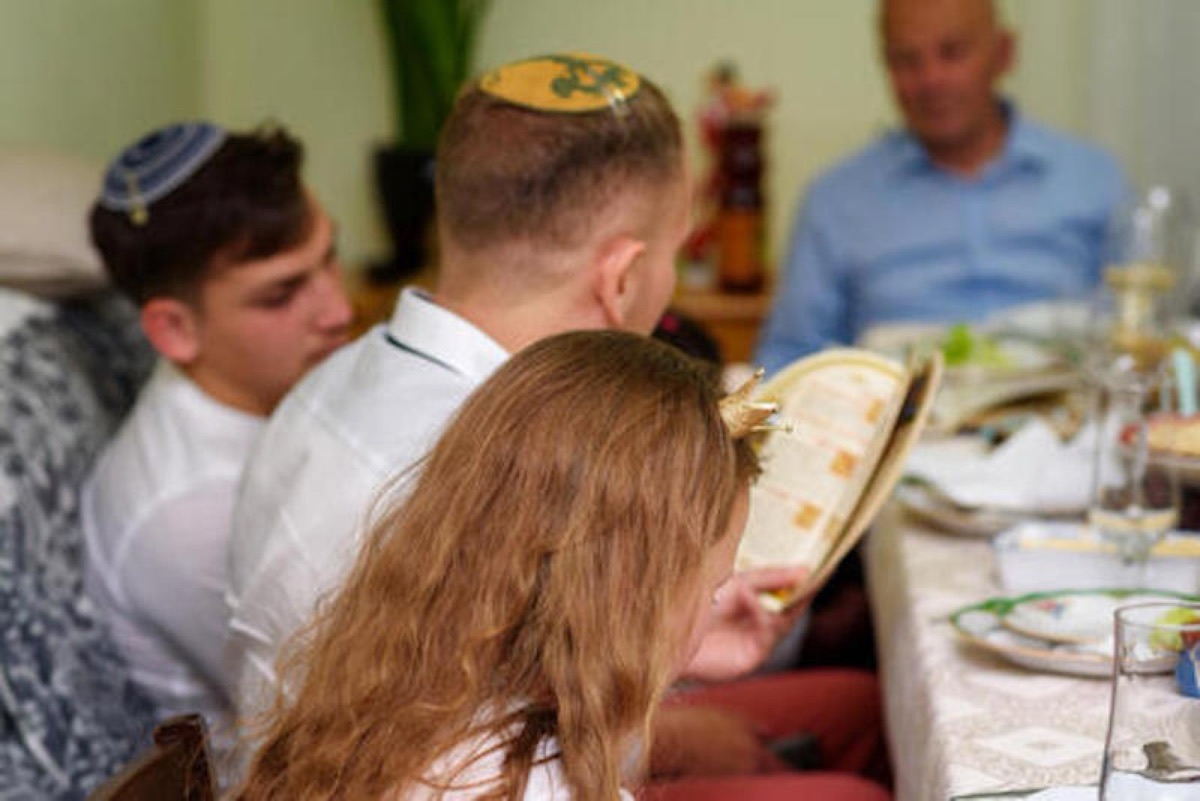
The Torah also says who may take part in this meal.
If you think you may not take part because you are not Jewish, or because you are an imperfect person, don't worry. Those who came out of Egypt were very imperfect. They did not even understand how to live by the commandments, because they received those commandments later, in the wilderness; at the time of the first seder each of them lived according to the ideas of life they had picked up in idol-worshipping Egypt. So much for imperfection. As for whether you may eat the Pesach if you are not Jewish: God has given every person from every nation the opportunity, by their own desire, to begin following God and to celebrate Pesach (Shemot / Exod 12:48–49).
"And a mixed multitude went up with them, and flocks and herds, a very great number of livestock." (Shemot / Exod 12:38)
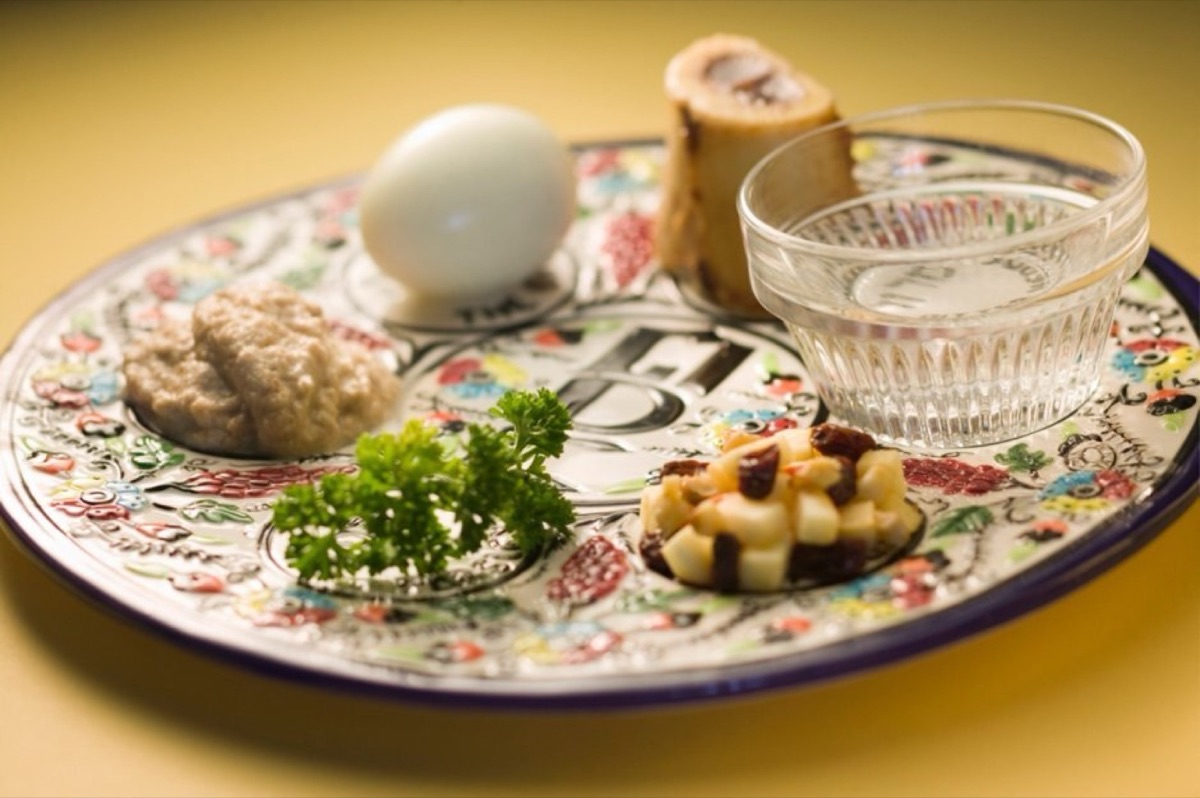
So everyone has a plate with something edible on it, and it is not just a treat. Everything on the plate will help us understand the meaning of the festival — through explanation, through taste. This, by the way, is very Jewish: to set out the essence of a festival not only through a lecture but also through a meal. And in general, festivals and food go together very well, in my opinion. By the way, Yeshua thought so too. After all, the so-called "Last Supper", according to the first three Gospels (Matt 26:17–19; Mark 14:12–16; Luke 22:7–15), was a Passover seder, that is, not a secret meal at all. (The Gospel of John describes the chronology differently, and this has long been a subject of discussion.))
3. Karpas with salt water#
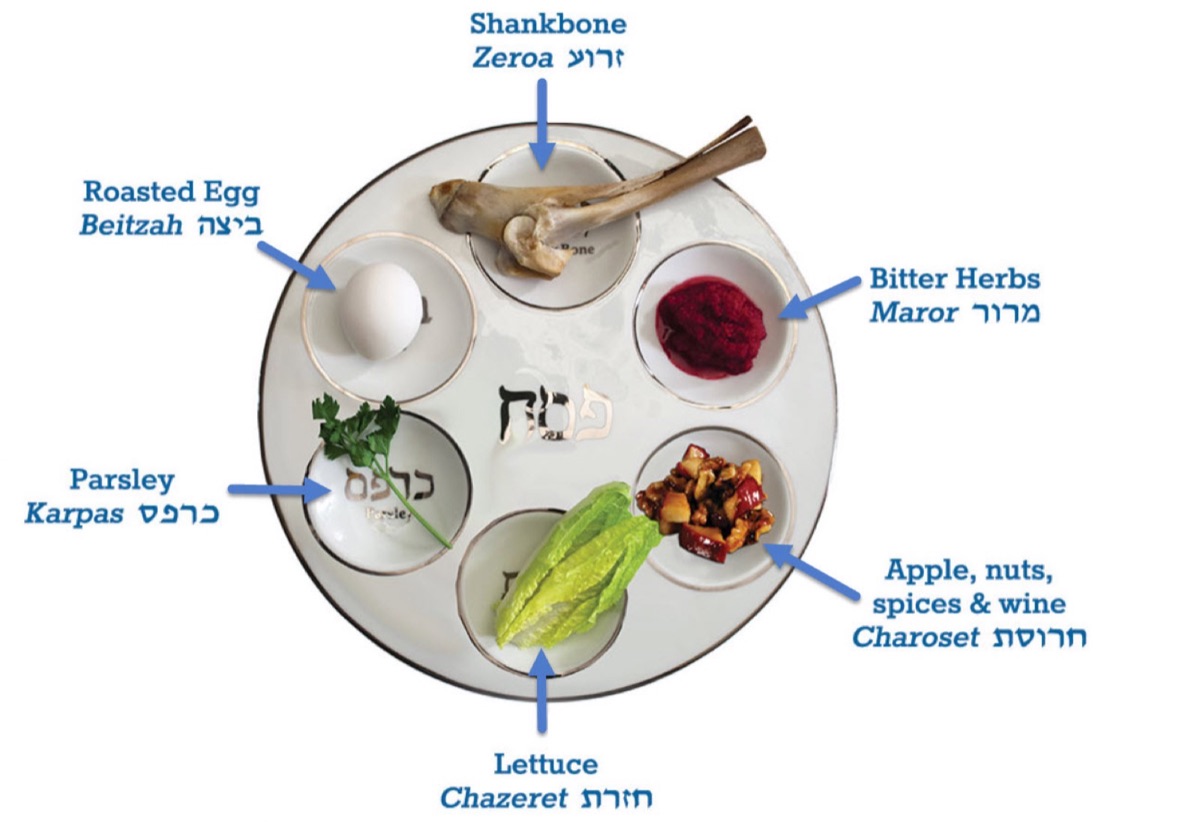
Karpas — any garden greens (parsley, boiled potato, onion, celery, radish), "grass that grows underfoot" — symbolizes the powerless position of the Jews in Egyptian slavery.
Baruch atah, Adonai Eloheinu, Melech ha-olam, borei p'ri ha-adamah.
ברוך אתה ה' אלוהינו מלך העולם בורא פרי האדמה
Blessed are You, Lord our God, King of the Universe, who creates the fruit of the earth. Amen.
We eat the karpas.
Karpas dipped in salt water reminds us of the poor food of the Jews in slavery, food soaked with tears.
On ordinary days we do not dip food in salt water — this should puzzle the children and arouse their curiosity, and so become a memory of the festival of Pesach.
Yachatz#
Breaking the matzah#
Matzah came into being precisely with the Exodus from Egypt. The dough, kneaded in haste, did not have time to rise before it was baked into bread. We take the middle sheet of matzah, break it in two and hide one part. The hidden part is called the "afikoman". You will learn what it is a little later (see point 11).
Maggid (the telling)#
Mah Nishtanah. The 4 questions.
1. Why is this night different from all other nights? Why on all other nights may we eat both chametz and matzah, but on this night only matzah?
2. Why on all other nights do we eat all kinds of greens, but on this night bitter greens?
3. Why on all other nights do we not dip our food, but on this night we dip twice — karpas in salt water and maror in charoset?
4. Why on all other nights may we eat sitting upright or reclining, but on this night we all recline?
4. Matzah#
Baruch atah, Adonai Eloheinu, Melech ha-olam, ha-motzi lechem min ha-aretz.
בָּרוּךְ אַתָּה אֲדנָי אֱלהֵינוּ מֶלֶךְ הָעוֹלָם הַמּוֹצִיא לֶחֶם מִן הָאָרֶץ
Blessed are You, Lord our G-d, King of the Universe, who brings forth bread from the earth.
Blessed are You, Lord our G-d, Master of the Universe, who has sanctified us by His commandments and commanded us to eat matzah
We eat the matzah.
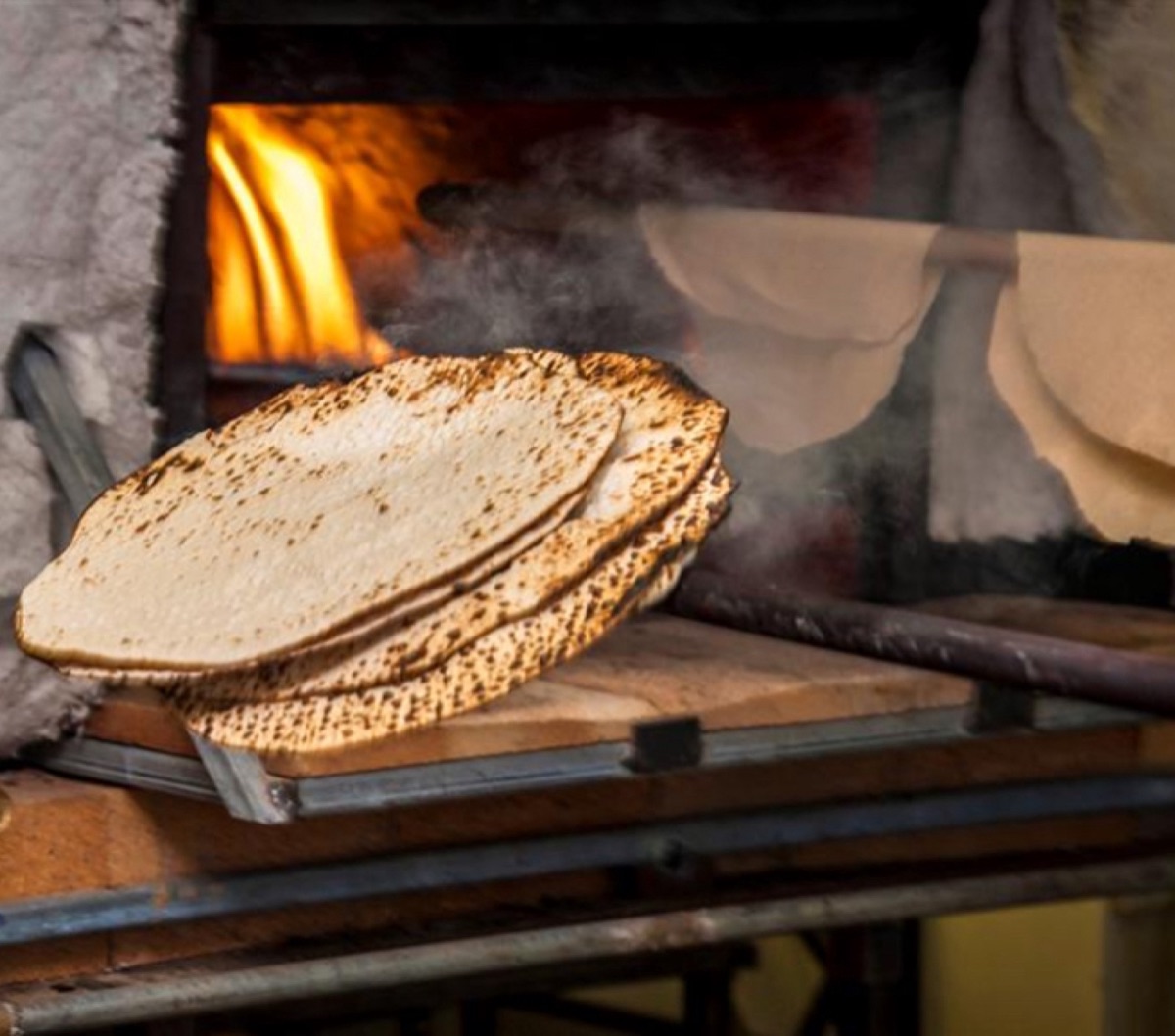
Matzah is called the bread of the wilderness, and the wilderness is a place of testing, a place of purification. At first a person does not understand the taste of matzah, that is, of the new life, but gradually comes to like it more and more.
You know that Pharaoh regretted letting the people go and sent his army to bring the Jews back or destroy them. The people were very frightened… As we have said, sin destroys us gradually, day by day. So gradually that sometimes we do not feel it. But as soon as we decide to live differently and make our exodus from the old life, he (the enemy, Pharaoh, sin) gathers all his strength and attacks hard. Our old desires flare up, others push things on us, relatives and friends do not understand us. "Oh, this is not what I expected," some think, and turn back. Don't be quick to be disappointed, friends. Does God lead us out and set us free in order to destroy us or give us a grey, boring existence? Be patient, and you will see that it is not so.
"And the Egyptians enslaved the children of Israel with crushing labour. And they made their lives bitter with hard work in clay and bricks and all kinds of work in the field, and every other work they forced on them with cruelty" (Shemot / Exod 1:13–14, translated from the Hebrew).
5. Maror and charoset#
Maror — romaine lettuce leaves, horseradish, chicory or other bitter greens.
Charoset — a paste of apples, honey and crushed nuts. Charoset reminds us of the clay from which our ancestors made bricks in Egypt.
Next, let us turn our attention to this little heap of horseradish, the maror. It symbolizes the bitterness of slavery.
It is customary to take a piece of matzah, put maror — that is, horseradish — on it, and sweet charoset on top, and eat it.
First sweetness, then bitterness...
This combination symbolizes sin and every kind of slavery and addiction, which at first seem pleasant, sweet and attractive. We want them because we do not see the bitterness hidden beneath the sweetness. And we rush in and eat, and only then does the bitterness come — the realization that this is inside us and is stronger than we are.
Notice: at first it seems like nothing, but then it gets more and more bitter, burns more and more. So it is with the presence of sin in our life.
At first nothing terrible, it seems — sometimes even interesting, pleasant — but then it starts to hurt, to burn, problems come, and in the end — ruin.
We remember how the Israelites at first adapted themselves to the Egyptians because it brought them profit, and the Egyptians promised it and at first delivered — just as the world today promises much, especially to believers, and at first delivers. The prince of this world always plays this game. And not only people of this world take the bait, but also people who ought to have separated themselves from this world.
"We were slaves to Pharaoh in Egypt, and the Lord our G-d brought us out from there with a mighty hand and an outstretched arm. And if the Holy One, blessed be He, had not brought our forefathers out of Egypt, then we, our children and our children's children would still be slaves to Pharaoh in Egypt.
And we cried out to the Lord, the G-d of our fathers. And the Lord heard our voice and saw our suffering, our misery and our oppression" (from the Passover Haggadah; cf. Devarim / Deut 6:21; 26:7).
How like people today: to remember Him only when everything is bad…
The Jews remembered God, God remembered the Jews and sent them a special messenger, filled with power from God to work miracles. His name was Moshe.
Coming to Egypt, Moses obtained a meeting with Pharaoh, at which, in God's name, he proposed that Pharaoh let the people go. Pharaoh was not delighted with the proposal, because the unpaid slave labour of the Jews was the basis of Egypt's economic power. What is more, in the name of what God does this insolent upstart speak? Egypt has enough gods of its own. They need no competitors. In response to the "small" miracles Moses performed, the priests of Egypt performed similar ones. But Pharaoh rejoiced too soon. God decided to execute judgment on the false gods of Egypt in order to show His power (Shemot / Exod 12:12).
Let us remember these events…
- Blood
- Frogs
- Lice
- Swarms of flies
- Pestilence on livestock
- Boils and sores
- Hail
- Locusts
- Darkness
- Death of the firstborn
6. The egg#
A symbol of our people's tempering#
What else do we see on the plate?
First, a hard-boiled egg.
But in fact this is a later element.
The Torah says nothing about it.
Yet the longer you boil an egg, the harder it becomes. Something similar happened to the Jewish people: whatever it went through — persecutions, trials, oppression — it did not disappear but only grew harder.
7. Meat#
The meat on the plate reminds us of the animal sacrifice by which people substituted for themselves before God for their sins. Notice: first all the chametz is removed from the house, that is, the person decides to live differently. In other words, he repents, grieves and regrets his past life, and only then can he substitute the death of the sacrifice for his own death for his sins. The sacrifice was chosen with the greatest care. It had to be the very best, completely healthy and young animal.
Of course, only a sinless sacrifice could free a sinful person from punishment; otherwise it would itself need someone to take its place for its own sins.
Let us now pray to God that He forgive us all the "chametz" — all the sin of our past life — so that we may become worthy to partake of this Sacrifice.
"Blessed are You, Lord our G-d, Master of the Universe, who has sanctified us by His commandments and commanded us to remove the chametz.
All chametz and leaven that I have not found and not destroyed, let it be considered nullified, like the dust of the earth. And You, merciful Lord, forgive me all the sins I have committed, those I remember and those I have forgotten — and through Your mercy and forgiveness let them be like the dust of the earth."
8. Hillel's sandwich#
Hillel, an ancient teacher of Israel who lived shortly before Yeshua's first coming, is said to have made this sandwich: he took matzah, bitter herbs and meat of the Passover lamb and ate them together, in fulfilment of the words "they shall eat it with unleavened bread and bitter herbs" (Bemidbar / Num 9:11; cf. Shemot / Exod 12:8).
At traditional seders today the meat of the Passover sacrifice is not eaten. Why?
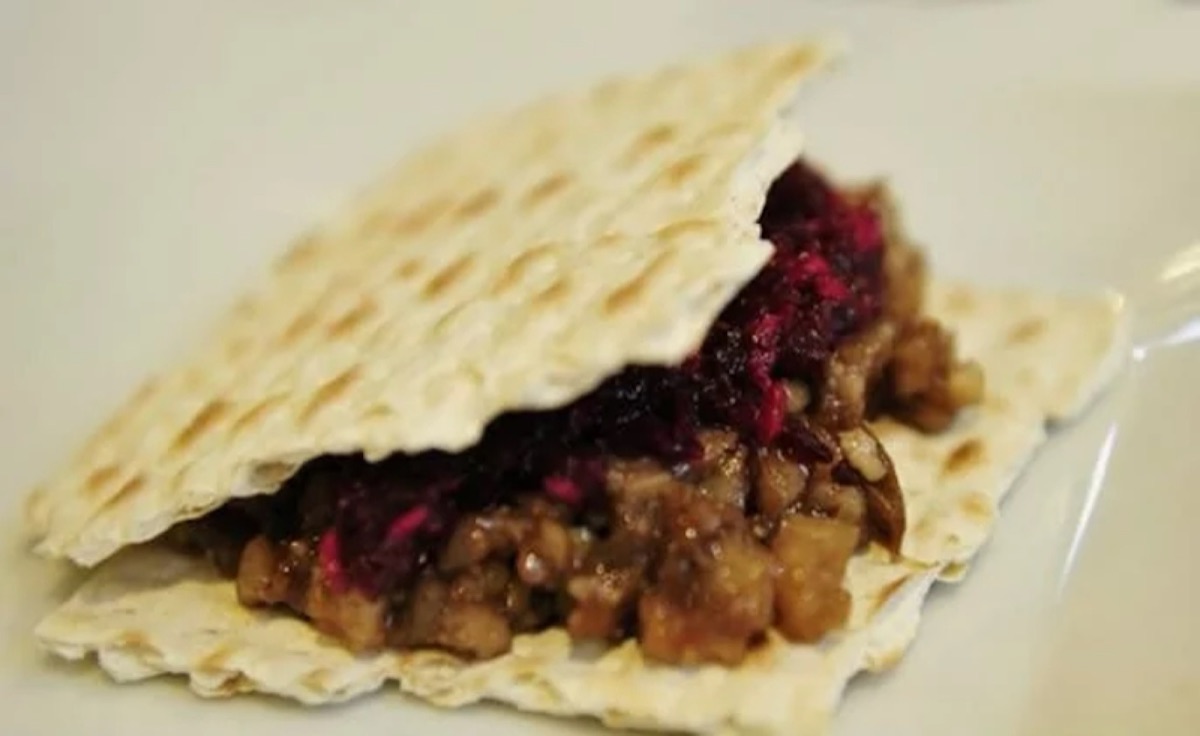
On the one hand, they do not yet believe that the Messiah's sacrifice has already been offered; on the other, there is no Temple, no priesthood and no Passover sacrifice. So there is always a bone with meat on their plate as a reminder of the Passover sacrifice. But it is the only element of the Passover plate that is not eaten, so that no one should think this sacrifice has been offered. It is a reminder that without the Passover sacrifice there is no Passover. And the Passover celebrated by our Jewish brothers who do not know their Saviour is only part of the true Old Testament Passover, because in fact they celebrate only Unleavened Bread (matzah). And the feast of Unleavened Bread itself began on the day after the sacrifice of the Passover lamb and its holy eating, and lasted seven days (Vayikra / Lev 23:5–6).
Today there is no Passover lamb. And the closer we come to the last days, the more not only ordinary Jews but also rabbis begin to be troubled by this and to speak about it openly. Today the Temple Institute operates in Israel, recreating vessels and garments modelled on those of the Second Temple. Its staff stress that it is not a museum: everything is being prepared for the restoration of the Third Temple. For several years now demonstration (training) sacrifices of a lamb have been held before Pesach, with the organisers stressing that this is not the Passover sacrifice itself. Interest in them is clearly growing. Do you understand what this says? A thirst for the Passover sacrifice is rising in Israel. They increasingly understand that without it there is no true Pesach — although for centuries the rabbis convinced them that it is not necessary now.
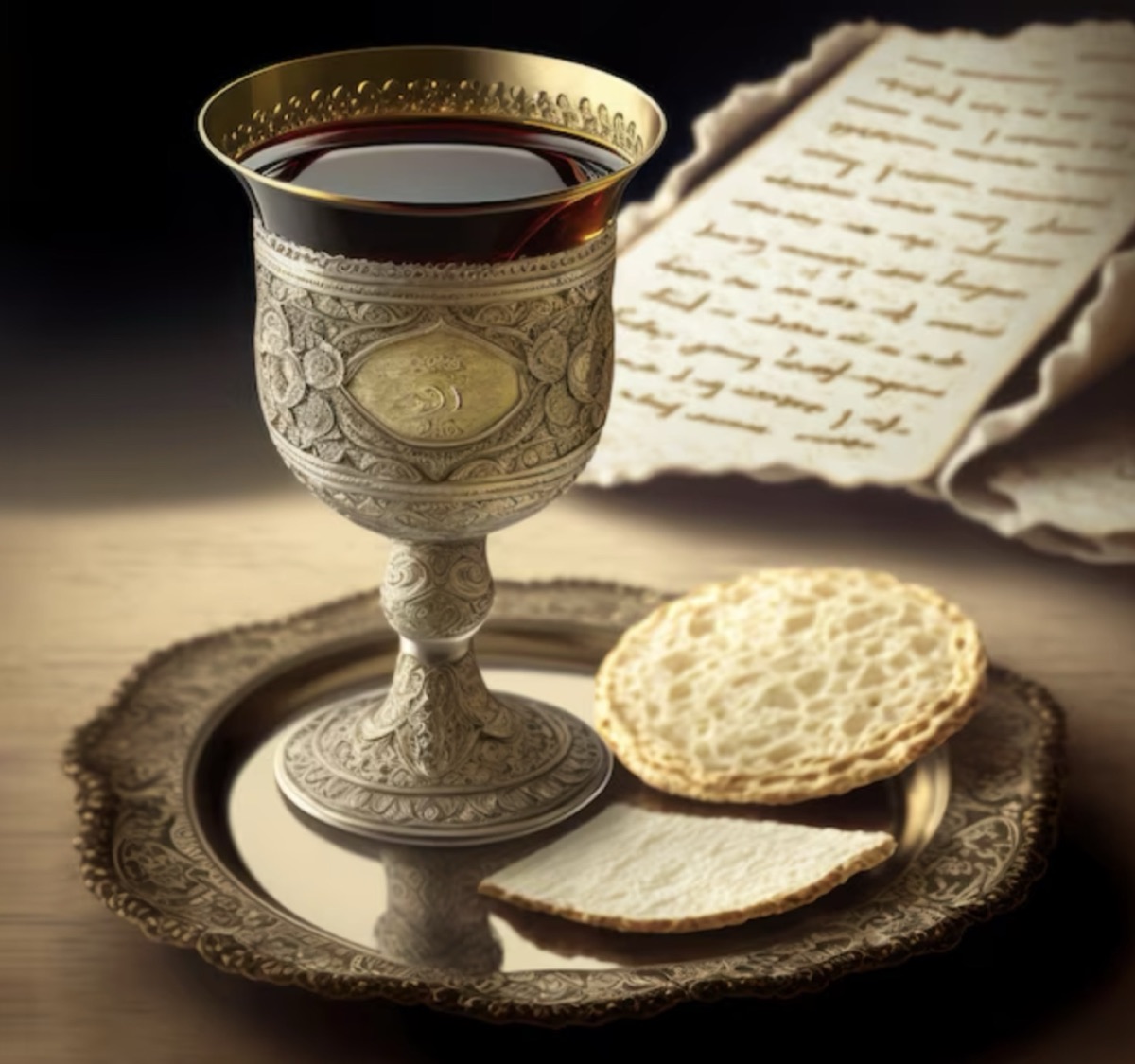
9. The second cup#
Next we drink the second cup, which symbolizes Israel's deliverance from Egypt.
Baruch Atah Adonai Eloheinu Melech ha-Olam borei p'ri ha-gafen.
Blessed be You, Lord, King of the Universe, who gives us the fruit of the vine.
10. Shulchan orech#
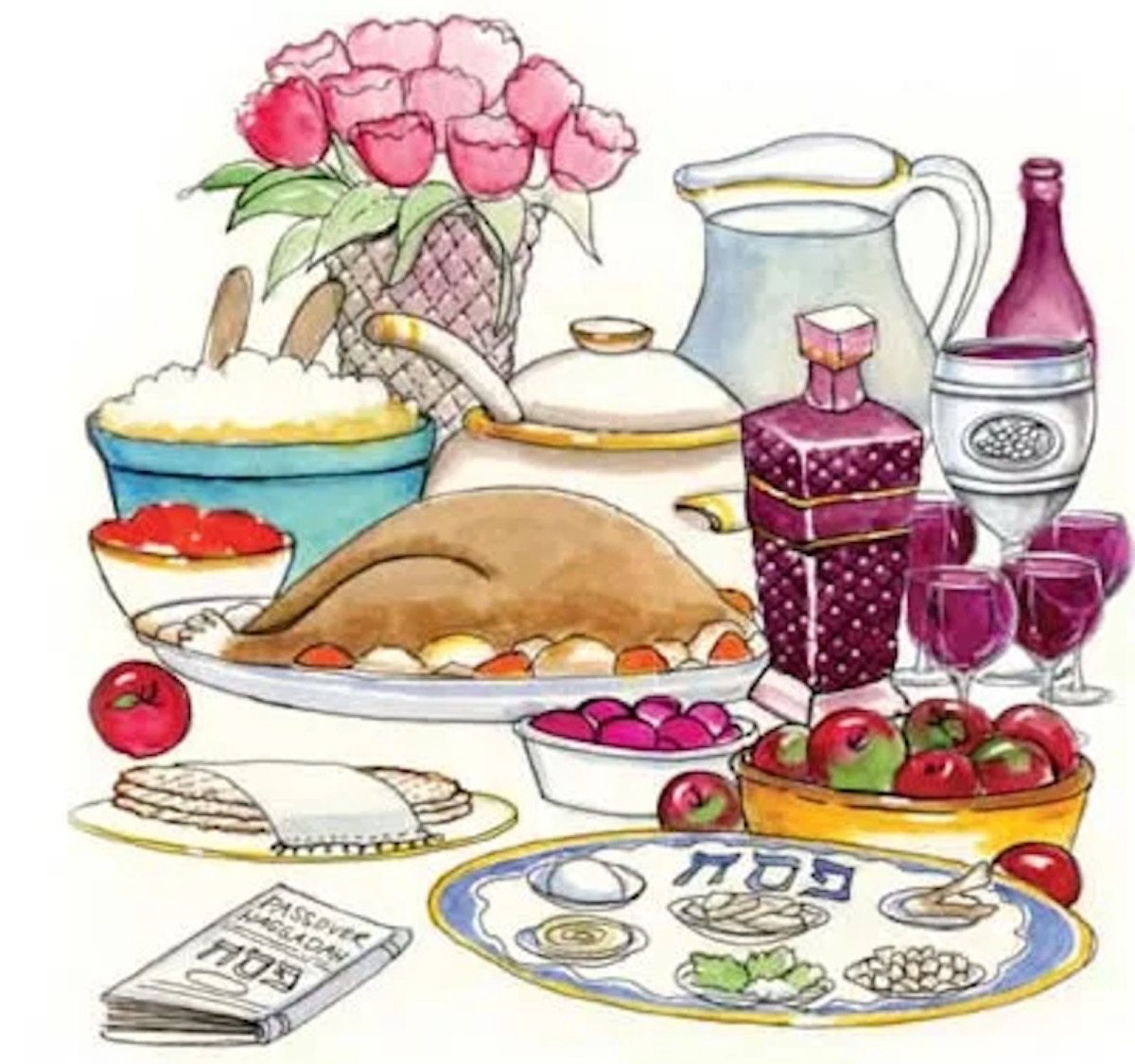
The festive meal, during which everyone tries to treat the others to what they have prepared for this part of the seder.
Now it is good for us to eat. This is an important part of the Passover seder, because if people do not eat, they do not take part in Passover.
Prayer after the meal#
Our G-d and G-d of our fathers!
May there rise, and come, and reach (Your hearing), and be noticed, and favourably received, and heard (by You, our prayer), and may there be renewed and restored (by You) the remembrance of us and Your attention to us; and the remembrance of our fathers, and the remembrance of the Mashiach Yeshua, descendant of David Your servant, and the remembrance of Jerusalem, Your holy city, and the remembrance of all Your people, the House of Israel — for deliverance and good (to us), for love and kindness, and for mercy (on us), and for a good life and peace (for us) — on this day of the festival of matzah, this holy festival day. Remember us, Lord our G-d, for good on this day; and be mindful of us on this day, blessing us; and save us on this day for a good life; and by Your promise to save and have mercy, pity us and be gracious (to us); and be lenient with us and save us — for our eyes are turned to You, because You, G-d, are a merciful and gracious Master.
Blessed are You, Lord our God, King of the Universe, who is good and does good. You who make peace in Your heights, send peace to us and to all Israel,
and let us say: AMEN!
The holiest part
11. Afikoman#
The time has come to say and do the most important thing. The hidden, broken sheet of matzah — the afikoman — has been found.
Orthodox Judaism has still not arrived at a single position on what the afikoman means.
The best-known interpretation of the three sheets of matzah is this: the first sheet is the priests, the second the Levites, the third the rest of the people.
Then the question: why is the sheet representing the Levites broken, and why is part of it — the afikoman — hidden?
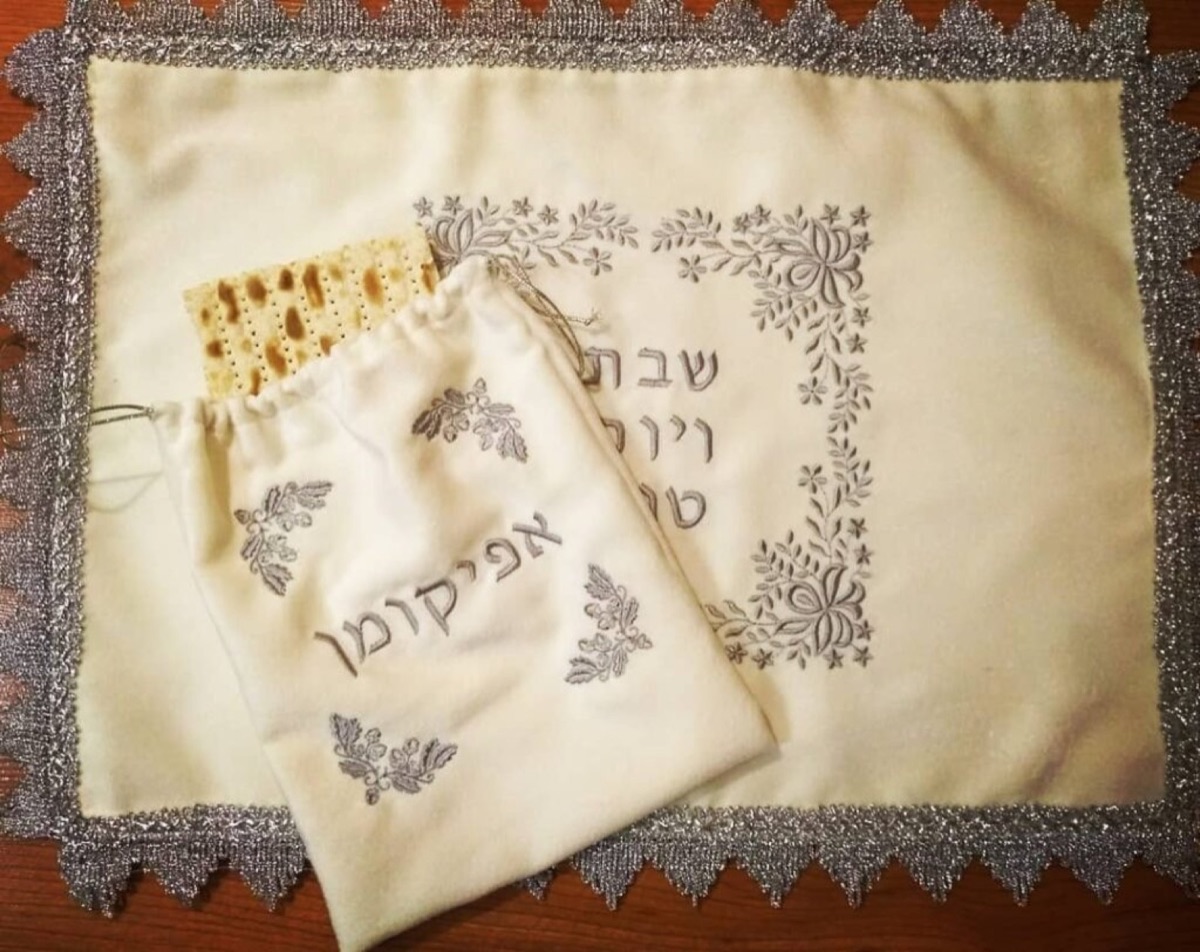
In the light of Yeshua's words "This is My body" (Matt 26:26), Messianic believers understand it differently: the unleavened matzah symbolizes His sinless life, broken for us. He was buried and on the third day rose again (1 Cor 15:3–4). So the afikoman is hidden, and then found and brought out for everyone. But why by a child?
The Mashiach said: "Unless you turn and become like children, you will never enter the Kingdom of Heaven" (Matt 18:3). If we believe in Him with a child's faith, trusting Him completely as a little boy trusts his father, we will receive everything for which He came into our life. We will find Him, as this child found the afikoman that symbolizes the Messiah.
The afikoman — that same hidden piece of matzah — is brought out.
The afikoman symbolizes the Passover lamb.
This explanation (the afikoman as a memorial of the Passover sacrifice) is also given in many traditional, non-Messianic Haggadot.
Friends, these are signs of the last days! Within Judaism itself, within the Jewish people, an understanding of the importance and necessity of the sacrifice, especially the Passover sacrifice, is growing. And more and more Jews, even those responsible for this literature, are beginning openly to acknowledge the absence of the most important thing and long for it to appear.
As you remember, we broke the middle matzah, hid the larger part of it, and only at the end of the seder is it found. We understand Whom this symbolizes. Some scholars (for example, David Daube) have suggested that the afikoman rite is linked to an ancient messianic expectation and may have taken shape at a time when Messianic Jews celebrated Pesach together with the whole people. This hypothesis remains disputed.
At our Passover seders we hold the breaking of bread with the afikoman, because it is already broken. The symbolic picture with it is much clearer than when we hold an ordinary breaking of bread — there we do not hide and bring out what symbolizes Yeshua, risen from beneath the earth. Here we do.
Breaking of bread#
At the end of this full Passover meal of the Mashiach we want to proclaim the glory of God and bless this unleavened bread, in which we will partake of His broken Body.
Baruch atah Adonai Eloheinu, melech ha-Olam ha-motzi lechem min ha-aretz.
Blessed be You, our Lord, King of the universe, King of eternity, who brings forth bread from the earth, as You brought forth from the earth our Saviour, Your Son Yeshua. And may His broken Body break the power of darkness in us and around us and open the windows of heaven, so that the radiance of Your glory, Mashiach, may spread over all the earth. Amen!
12. The third cup — the cup of blessing#
The cup symbolizing the Blood of the Messiah, by which our sins are covered, by which everyone who has entrusted themselves to God is cleansed, by which everyone is protected from the destroyer.
Judgment and salvation, wrath and redemption are gathered together in the mystery of one cup, whose meaning the Messiah explained that evening. Yeshua did not speak of the cup as something purely symbolic. He was describing events that were soon to happen in His life.
Tehillim 116:12–14 (115:3–5 in the Synodal numbering): "What shall I render to the LORD
for all the good He has done for me? I will lift up the cup of salvation and call on the name of the LORD. I will pay my vows to the LORD in the presence of all His people."
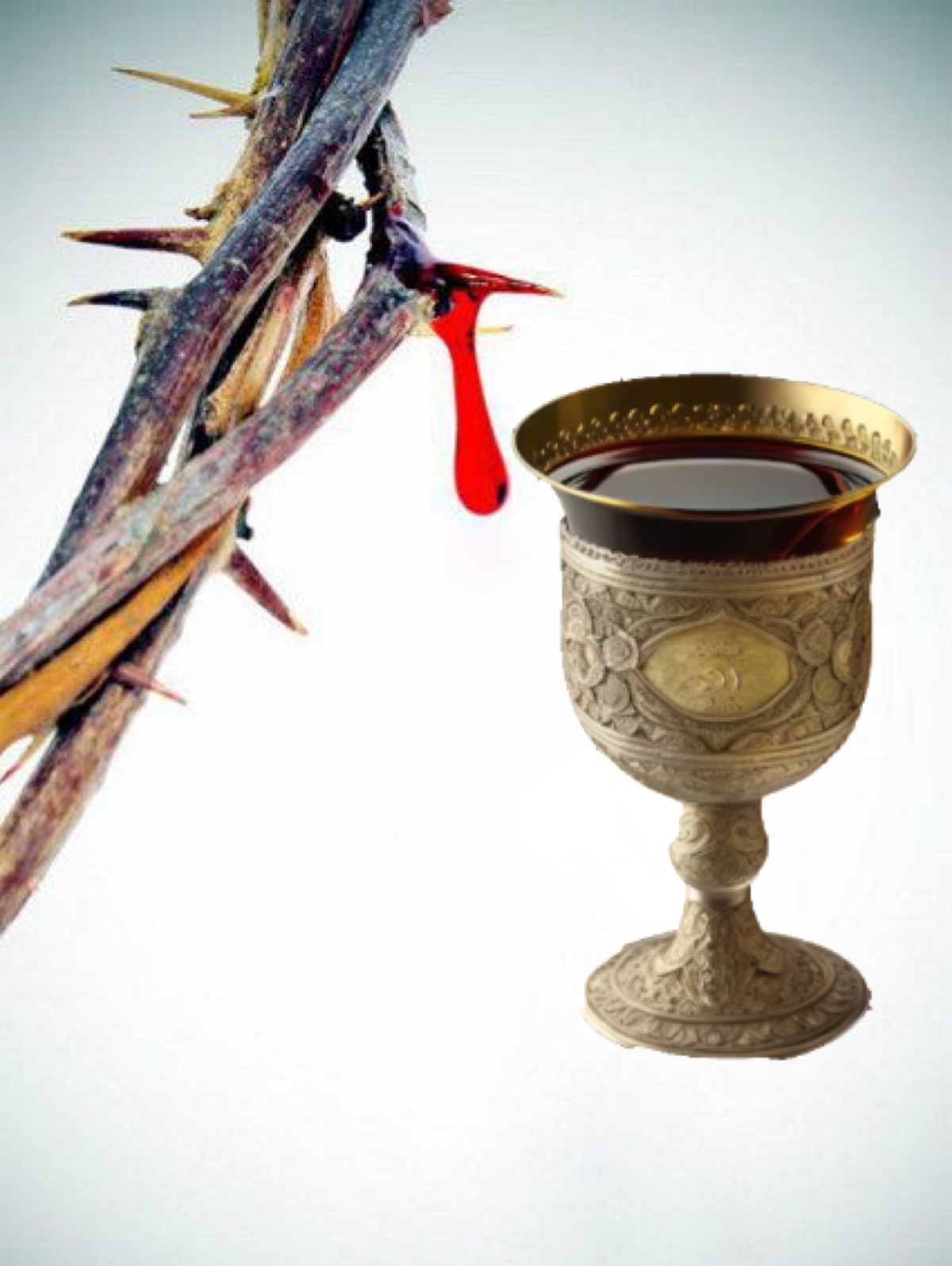
Later that evening Yeshua cried out to God in suffering and prayer: "Father! If You are willing, take this cup away from Me! Yet not My will, but Yours be done" (Luke 22:42). Being a man, Yeshua could wish that this cup of judgment, which all people deserved for breaking the covenant with God, would pass Him by.
Yet, being the obedient Son of God, Yeshua knew that the cup of blessing could be poured out for the salvation of many only if He first drank from the cup of God's judgment on all humanity.
Despite the pain of separation from the Father, our Lord was willing to drink from that cup, to bear that punishment, to go through that horror and death, so that we could be set free and forgiven.
No wonder the apostle Paul calls it the cup of blessing (1 Cor 10:16). What could be a greater blessing than what the Messiah brought through His death, burial and resurrection?
By calling it the cup of blessing, as it was called in the Jewish Passover tradition, the apostle Paul points to the strong connection between Pesach and communion, the breaking of bread.
The roots of this sacrament go deep into God's eternal plan, revealed in the pages of Scripture and in the traditions of God's chosen people.
We pray#
Blessed are You, Lord our God, King of the universe, King of Israel, who has given us the fruit of the vine as a foreshadowing of the blood of Yeshua the Mashiach, the Mashiach of Israel and of all humanity. Thank You! Amen!
Glory to You, O God, Almighty King! Glory to You, who reveal Your glory in this still fallen world! Glory to You that by Your mercy You have placed Your fire and the reflection of Your glory in our mortal bodies and have given, through the death and resurrection of Your Son, our King, the King of Israel and of all people — Yeshua — a new life by which we live and breathe and in which we ascend to the heavenly Yerushalayim!
13. B'rakhah#
Let us all now bless the God of Israel.
Baruch atah, Adonai Eloheinu, Melech ha-olam, asher kidshanu b'Yeshua ha-Mashiach, or ha-olam v'adon yom tov.
בָּרוּךְ אַתָּה אֲדנָי אֱלהֵינוּ מֶלֶךְ הָעוֹלָם אשר קידשנו בישוע המשיח אור העולם ואדון יום טוב
Blessed are You, Lord our God, King of the universe, who has sanctified us in Yeshua the Messiah, the Light of the world and the Lord of this festival! Amen! (cf. Yochanan / John 8:12)
14. The fourth cup — the cup of the Kingdom#
Matt 26:29: "I tell you, from now on I will not drink of the fruit the vine gives until the day I drink new wine together with you in My Father's Kingdom."
Everyone who has entered into covenant with God through the sacrifice of Yeshua receives a place in God's eternal Kingdom.
And we will drink of the fruit of the vine together with Him in the Kingdom, when He comes again in glory.
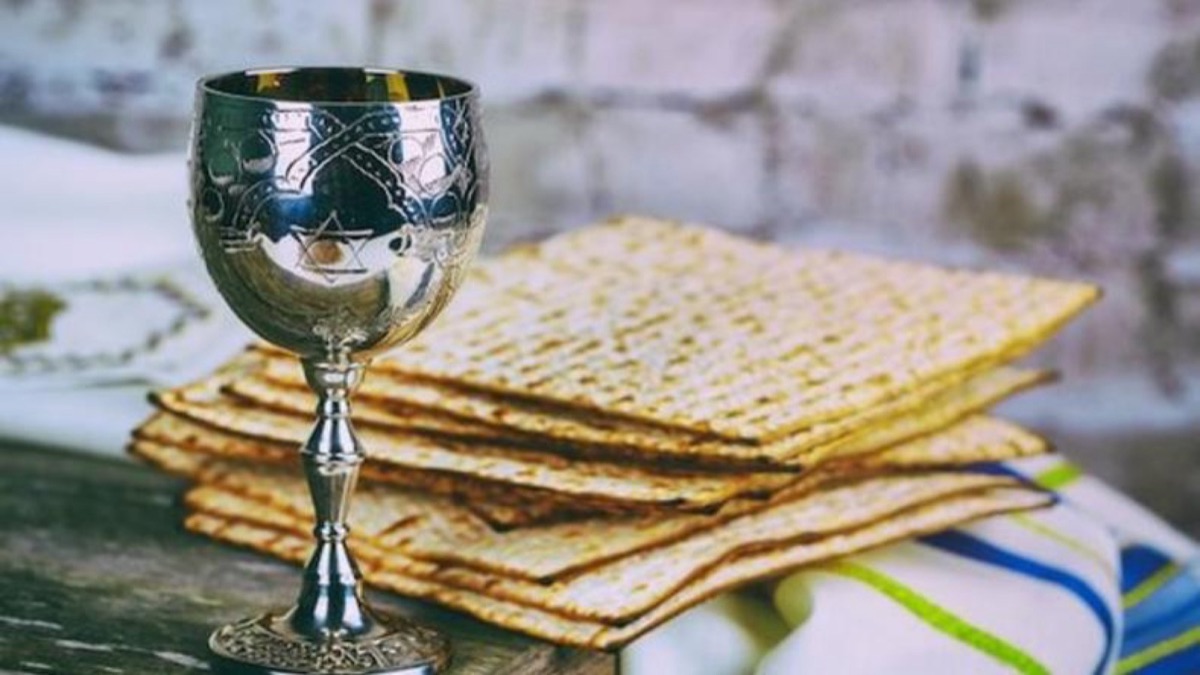
15. L'shanah ha-ba'ah bi-Yerushalayim#
Next year in Jerusalem!
Chag Pesach Sameach!