
Tzitzit צִיצִית
Remembering the Covenant and the holiness of everyday life in the light of the Torah of the Messiah
In short
- Tzitzit are a direct commandment of the written Torah addressed to the children of Israel (Bemidbar 15:37–41; Devarim 22:12).
- The meaning of the commandment: memory, obedience, holiness.
- Tzitzit are not a means of justification before God; Yeshua rebuked not the fringes but showy piety.
- Bemidbar 15:37–41
- Devarim 22:12
- Matt 9:20–22; 23:5
- Luke 8:43–48
- Acts 15:1–29
- Eph 2:8–10
"And it shall be unto you for a fringe, that ye may look upon it, and remember all the commandments of the LORD, and do them" (Bemidbar / Num 15:39, KJV).
Introduction. Why did the Most High command fringes on clothing?#
People easily forget what they consider most important.
Everyday cares, desires, fears and the desire for recognition can distract a person from God's commandments.
The Torah offers not only spoken instructions but also visible reminders of the Covenant.
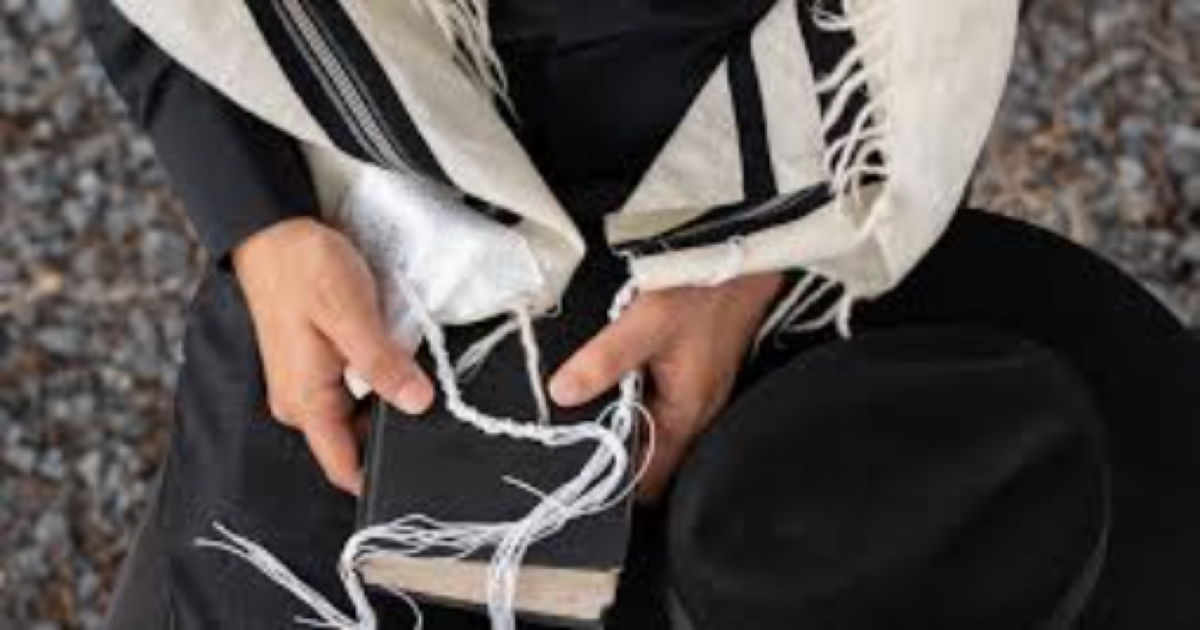
One such reminder is tzitzit (צִיצִית), special fringes on the corners of a garment.
Unlike the kippah, which arose as a religious custom, tzitzit have a direct basis in the written Torah.
But how should this commandment be understood today? Does it keep its meaning for Messianic Jews? Should believers from other nations keep it? And what place do outward signs of obedience have in Yeshua's teaching?
These questions call for a careful look at Scripture and at the Jewish halakhic tradition.
1. A direct commandment of the Torah#
The main command is found in Bemidbar (Numbers) 15:37–41.
The Lord addresses the children of Israel and commands them to make fringes on the corners of their garments, including a thread of tekhelet, a special blue colour.
Devarim (Deuteronomy) 22:12 speaks of fringes on the four corners of a garment.
These two texts form the biblical basis of the commandment. The Torah itself explains its purpose.
Remembering the commandments#
Tzitzit are meant to remind a person of the will of the Most High.
They are not an ornament for beauty's sake nor a sign of personal superiority.
A visible object is meant to bring the mind back to spiritual responsibility.
A guard against unfaithfulness#
Bemidbar 15:39 contains a warning not to follow one's own heart and eyes, being carried away by what leads a person away from faithfulness to God.
The fringes remind us that human desires need moral guidance.
A calling to holiness#
The next verse speaks of the need to remember and do God's commands in order to be holy before Him.
So tzitzit connect three themes: memory, obedience, holiness.
These make up the spiritual content of the commandment.
2. Tekhelet — the blue thread#
The command about tzitzit mentions tekhelet (תְּכֵלֶת), an ancient dye of the blue range.
It was traditionally linked with a particular way of dyeing threads.
After the loss of a generally recognized, continuous practice of producing the ancient tekhelet, many Jewish communities used white fringes for centuries.
In modern times there have been attempts to restore the production of a dye corresponding to the biblical tekhelet, in particular using sea snails.
However, halakhic opinion differs on the reliability of the reconstruction and on the practical obligation to use modern tekhelet.
So it cannot be claimed that all modern tzitzit necessarily have a blue thread, or that any blue thread automatically meets the biblical requirement.
In rabbinic tradition tekhelet is symbolically linked with the sea, the sky and the throne of Divine glory (Menachot 43b).
This is a profound image, but it should be distinguished from the literal text of the commandment.
The Torah speaks first of all about remembering and doing the commandments, while the symbolic interpretation of the colour unfolds in later tradition.
3. Tzitzit in Jewish halakha#
Jewish religious practice has detailed rules for making and wearing tzitzit.
They concern the number of threads, ways of tying, placement of the fringes, the form of the garment and the blessings.
The common traditional form has eight visible thread ends and a set number of knots, although tying patterns vary.
There is also a well-known symbolic explanation linking tzitzit with the 613 commandments.
According to this interpretation, the numerical value of a particular spelling of the word "tzitzit" is 600; to it are added eight threads and five knots. The result is 613.
This is a rabbinic symbolic interpretation, not an arithmetical instruction stated directly in Bemidbar 15.
Tallit katan and tallit gadol#
In modern practice tzitzit are often worn on two kinds of garment.
- Tallit katan — a small four-cornered garment with fringes that can be worn in everyday life.
- Tallit gadol — the large prayer tallit, used mainly during prayer (see "Tallit").
Communities have their own customs about whether the fringes of the small tallit should be visible or may remain under the outer clothing.
This means that the direct command of the Torah and the ways of carrying it out in practice must be distinguished.
4. Yeshua and the rebuke of showy piety#
In Mattityahu 23:5 Yeshua rebukes religious leaders who do their deeds to be seen by people: "they make broad their phylacteries, and enlarge the borders of their garments" (Mattityahu 23:5, KJV).
The Greek word kraspedon (κράσπεδον), used in this text, can refer to the fringes connected with the Jewish practice of tzitzit.
It is important to note that Yeshua does not declare the commandment of tzitzit itself sinful.
The object of His criticism is the use of religious signs for the sake of recognition and superiority.
A person can wear fringes, keeping the commandment with a sincere heart. But he can also use the same sign to display his own righteousness.
So outward observance should not be separated from a person's inner state.
Did Yeshua wear tzitzit?#
The Gospels of Matthew and Luke mention the edge or fringe of Yeshua's garment, which the woman with an issue of blood touched (Mattityahu 9:20; Luke 8:44).
Given the Jewish context and the meaning of the word kraspedon, there are strong reasons to think that tzitzit may be meant.
This fits the picture of Yeshua as a first-century Jew living within the religious and cultural world of Israel.
However, the text does not describe the form of the fringes or how they were tied.
So it should not be claimed that the Gospels prove Yeshua used a particular modern type of tzitzit.
A historically probable reconstruction should remain just that — a reconstruction.
5. Keeping the Torah and salvation#
For a Messianic believer it is essential to distinguish between obeying God's commandments and trying to earn salvation by one's own works.
Ephesians 2:8–10 links salvation with God's grace and faith, while also speaking of the good works for which believers are created in the Messiah.
These statements should not be artificially set against each other.
Salvation is not bought by keeping outward rules. But faith calls a person to a life that accords with God's will.
In this context, wearing tzitzit can express a Messianic Jew's faithfulness to a commandment of the Torah and a conscious bond with his people.
At the same time, outward observance does not replace love for God and neighbour.
A person who wears fringes and yet acts unjustly contradicts the very purpose of the commandment, which is meant to remind of holiness.
6. Acts 15 and believers from the nations#
One of the most important questions of Messianic halakha concerns how commandments given to Israel apply to believers from other nations.
The fifteenth chapter of Acts deals with the acceptance of non-Jews into the community of Yeshua's followers and their relation to circumcision and the Law of Moses.
The apostolic decision does not require them to be circumcised and to take on the full set of obligations of Jewish identity as a condition of belonging to the community of the Messiah.
At the same time, tzitzit are not directly mentioned in the text itself.
Therefore it cannot be claimed that the Jerusalem Council specifically forbade or specifically permitted non-Jews to wear fringes.
Different Messianic streams hold different views on how the Torah applies to believers from the nations.
- Some congregations regard tzitzit as a commandment addressed to Israel and do not place the obligation to wear them on non-Jews.
- Others propose a broader application of the practical ordinances of the Torah to all followers of Yeshua.
- There are also congregations that allow tzitzit to be worn voluntarily without regarding them as binding on all.
The author's approach in this article starts from the need to distinguish Israel's covenant identity from the acceptance of people from the nations into the community of the Messiah.
In this approach, a non-Jew is not required to wear tzitzit as a condition of salvation or of full participation in the life of the congregation.
7. Practical application#
For Messianic Jews#
Tzitzit can remain a meaningful expression of keeping a commandment given to Israel.
However, wearing them should go together with an understanding of the meaning of the Torah and a corresponding way of life.
Anyone who takes up this practice would do well to study the halakhic requirements for the fringes themselves rather than settle for a decorative imitation.
For believers from the nations#
A non-Jew who wishes to wear tzitzit should understand the Jewish origin of the commandment and respect the tradition of keeping it.
The question should be discussed with the congregation, especially if its practice involves particular rules.
Wearing tzitzit does not turn a non-Jew into a Jew and does not give a special spiritual position.
Nor should a believer from the nations who does not wear tzitzit be judged.
For all believers#
The spiritual meaning of this commandment draws attention to the need to remember God's will in everyday life.
Prayer, honesty, mercy, faithfulness in the family, justice and love for one's neighbour cannot be replaced by outward signs.
A symbol is useful when it reminds us of real responsibility.
8. A halakhic conclusion in the light of the Messiah's teaching#
- Status: tzitzit are a direct commandment of the written Torah, addressed to the children of Israel and tied to the appropriate garment.
- Traditional observance: Jewish halakha sets rules for making and wearing the fringes; communities differ in the details.
- For Messianic Jews: wearing tzitzit can be seen as a practical expression of covenant faithfulness to the Torah and of Jewish identity.
- For believers from the nations: how the commandment applies remains a matter of difference in Messianic halakha. In the approach presented in this article, wearing tzitzit is not placed on them as a universal obligation.
- Condition of salvation: tzitzit are not a means of justification before God.
- Main spiritual principle: an outward reminder should lead to keeping God's commandments, to humility and to holiness.
Conclusion. Holiness in every action#
The commandment of tzitzit shows how deeply the Torah connects spiritual life with everyday life.
Faith should not exist apart from ordinary human actions. Every decision, every word and every step has moral significance.
The fringes on a garment become a visible reminder of an invisible responsibility before the Most High. But the reminder itself is not yet obedience.
If a person looks at the tzitzit but forgets justice and mercy, he loses sight of the main purpose of the commandment.
But if the outward sign helps him stop in the face of temptation, remember God's will and act rightly, he fulfils the purpose the Torah itself reveals.
In the light of Yeshua's teaching, true faithfulness should not remain merely outward. It begins in the heart and becomes visible in deeds.
The main principle: remember the commandments of the Most High, keep them with love, and do not turn a symbol of holiness into a cause for pride.
See also: "Kippah" and "Tallit".
Main sources#
- Bemidbar (Numbers) 15:37–41.
- Devarim (Deuteronomy) 22:12.
- Mattityahu (Matthew) 9:20–22; 23:5.
- Luke 8:43–48.
- Acts 15:1–29.
- Ephesians 2:8–10.
- Talmud, Menachot 43b.
- Shulchan Aruch, Orach Chayim, sections 8–24.