
Kippah כִּפָּה
Tradition, reverence and freedom in the light of the Torah of the Messiah
In short
- The kippah is not a separate commandment of the written Torah but a Jewish custom (minhag) with differing degrees of normative force in different traditions.
- 1 Corinthians 11:4 calls for careful interpretation: the text does not name the kippah, but neither does it clearly exclude it.
- The kippah is not a condition of salvation and not a measure of a person's spiritual worth.
- Devarim 6:4
- Shemot 28
- Matt 6:1; 23:1–12
- 1 Cor 11:2–16
"Hear, O Israel: The LORD our God is one LORD" (Devarim / Deut 6:4, KJV).
Introduction. Can a head covering express faith?#
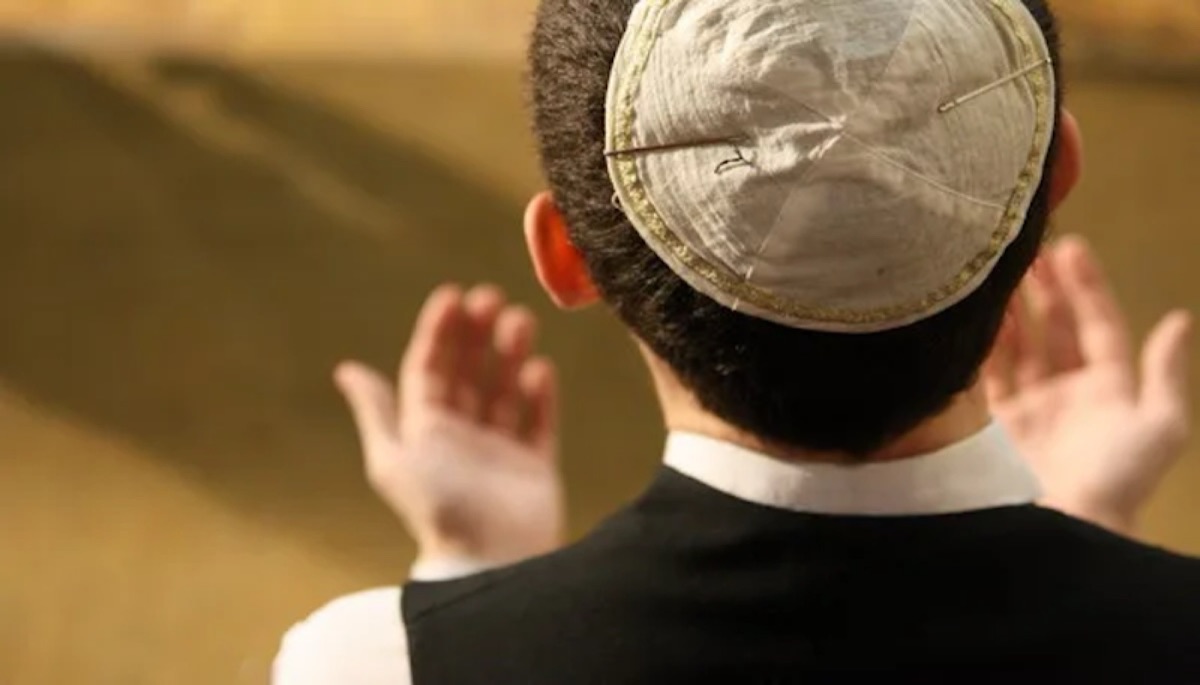
The kippah (כִּפָּה) is one of the most recognizable symbols of Jewish religious life. It can be seen in the synagogue, at prayer, during Torah study, at a festive meal and in the everyday life of Jews who keep the tradition.
For some, the kippah is a sign of reverence before the Most High. For others it expresses Jewish identity and belonging to the community. But a follower of Yeshua faces a particular question: is wearing a kippah a commandment of God binding on believers, or a tradition that may be kept voluntarily?
To answer, we need to distinguish between the written Torah, the later development of Jewish halakha and apostolic teaching.
1. The basis in the Torah: is there a commandment to wear a kippah?#
The written Torah contains no universal command obliging all the men of Israel to keep their heads covered with a kippah at all times.
The Torah describes certain elements of priestly clothing in detail. For example, Shemot (Exodus) 28 speaks of the head coverings of the priests who served in the Tabernacle.
But the rules for priestly garments cannot automatically be applied to all the men of Israel. The special clothing of the kohanim, the priests, was tied to their service.
So the first halakhic distinction must be made:
The kippah is not a direct universal commandment of the written Torah, unlike tzitzit, which are commanded in Bemidbar (Numbers) 15:37–41.
This does not mean that the custom of covering the head has no religious significance. It belongs to a different category: Jewish tradition and developing halakhic norms.
2. Jewish halakha: from pious custom to religious norm#
The Talmud mentions Rav Huna son of Rav Yehoshua, who would not walk even four cubits with his head uncovered, explaining it by his awareness of the Divine Presence above him (Kiddushin 31a).
Another Talmudic account links covering the head with cultivating the fear of Heaven, yir'at shamayim (Shabbat 156b).
These accounts show that covering the head was seen as an expression of reverence and spiritual discipline.
Over time the custom grew stronger. Later rabbinic halakha, including the Shulchan Aruch, gives normative attention to men covering their heads.
It would therefore be inaccurate to say that throughout Judaism the kippah remains merely an optional personal habit.
In modern Orthodox Judaism wearing it carries significant religious status. Yet the source of this norm is the development of the Jewish halakhic tradition, not a separate direct commandment of the Pentateuch for every man.
Here an important distinction appears between a mitzvah de-oraita, a commandment established by the Torah, and a minhag, a custom that in certain traditions can acquire binding force.
3. The teaching of the apostle Paul: what does 1 Corinthians 11 mean?#
One of the most debated texts is 1 Corinthians 11:2–16.
In verse 4 Paul speaks of a man who prays or prophesies with his head covered: "Every man praying or prophesying, having his head covered, dishonoureth his head" (1 Corinthians 11:4, KJV).
At first sight this may seem to contradict the Jewish practice of covering the head. But interpreting this passage calls for care.
The Greek text uses the expression κατὰ κεφαλῆς ἔχων, kata kephales echon. Scholars discuss its meaning: it may refer to a covering hanging down from the head, and some interpreters also connect the passage with hairstyles or the symbolism of outward appearance.
The text itself does not mention the modern kippah.
On the other hand, the absence of a direct mention of the kippah does not prove that it is automatically excluded from the scope of the apostolic instruction.
It would therefore be wrong to claim as an undisputed fact either that Paul forbade men only women's veils or, conversely, that he clearly forbade any male head covering for all time.
The context of the letter includes questions of prayer, prophecy, honour, the differences between men and women and order in the Corinthian congregation.
A Messianic interpretation needs to take into account both the apostle's Jewish background and the specific circumstances of his letter to Corinth.
A practical conclusion should not rest on the claim that the only possible interpretation of this difficult text has already been proven.
4. The kippah and Yeshua's teaching on piety#
Yeshua repeatedly drew His disciples' attention to the difference between outward religiosity and inner faithfulness to God.
In Mattityahu 6:1 He warns against doing acts of piety merely to gain human recognition.
In Mattityahu 23 He rebukes showy religiosity, where outward signs of piety are used to rise above others.
It does not follow that Yeshua rejected all religious customs or outward symbols.
The problem lies not in the symbol itself but in the place it takes in a person's life.
A kippah can be a sincere expression of humility. But it can also become a sign of self-satisfaction if a person begins to consider himself spiritually superior to others because of his appearance.
The Torah of the Messiah directs attention to the heart, from which obedience, love and reverence for the Most High should flow.
5. Practice in the Messianic community#
For Messianic Jews#
Wearing a kippah can express belonging to the Jewish people, respect for tradition and reverence during prayer and the study of Scripture.
Some Messianic congregations encourage this custom, others treat it more freely. There are also congregations that understand Paul's instruction on head covering differently.
So there is no single practice binding on all Messianic Jews.
For believers from the nations#
A non-Jew who believes in Yeshua is not obliged to adopt the kippah as a condition of salvation, of belonging to the Body of the Messiah or of spiritual maturity.
However, in a congregation where covering the head is customary, he may wear a kippah out of respect for the local order, if this agrees with his convictions.
In that case it is important not to present wearing a kippah as acquiring Jewish descent or a special religious status.
For congregational leaders#
Congregational order should be clear but not demeaning.
If a congregation follows a particular practice, it helps to explain its biblical and historical grounds without turning a disputed question into a means of spiritual pressure.
6. A halakhic conclusion in the light of the Messiah's teaching#
- Status: the kippah is a Jewish religious custom with differing degrees of normative force in different halakhic traditions; it is not a separate universal commandment of the written Torah.
- Practical application: a Messianic believer may regard wearing it as an expression of reverence and connection with the Jewish heritage, taking into account his own convictions and the order of his congregation.
- The limit of freedom: wearing a kippah is not a condition of salvation and should not be used to judge a person's spiritual worth.
- The question of 1 Corinthians 11: requires its own careful interpretation; existing differences should not be hidden.
Conclusion. Reverence begins in the heart#
A kippah can remind a person that the authority of the Most High is over him. It can be a sign of respect, of Jewish belonging and of conscious prayer discipline.
But a covered head does not yet mean a humble heart. And an uncovered head does not in itself show a lack of love for God.
True reverence is revealed in how a person speaks, acts, treats others and does God's will.
In the light of Yeshua's teaching, the question of the kippah should lead not to a rivalry of outward forms but to a deeper understanding of holiness.
The main principle: respect tradition, search the Scriptures, act by faith and do not turn an outward sign into a measure of righteousness.
See also: "Tallit" and "Tzitzit".
Main sources#
- Shemot (Exodus) 28.
- Devarim (Deuteronomy) 6:4–5.
- Mattityahu (Matthew) 6:1; 23:1–12.
- 1 Corinthians 11:2–16.
- Talmud, Kiddushin 31a; Shabbat 156b.
- Shulchan Aruch, Orach Chayim 2:6; 91:3.